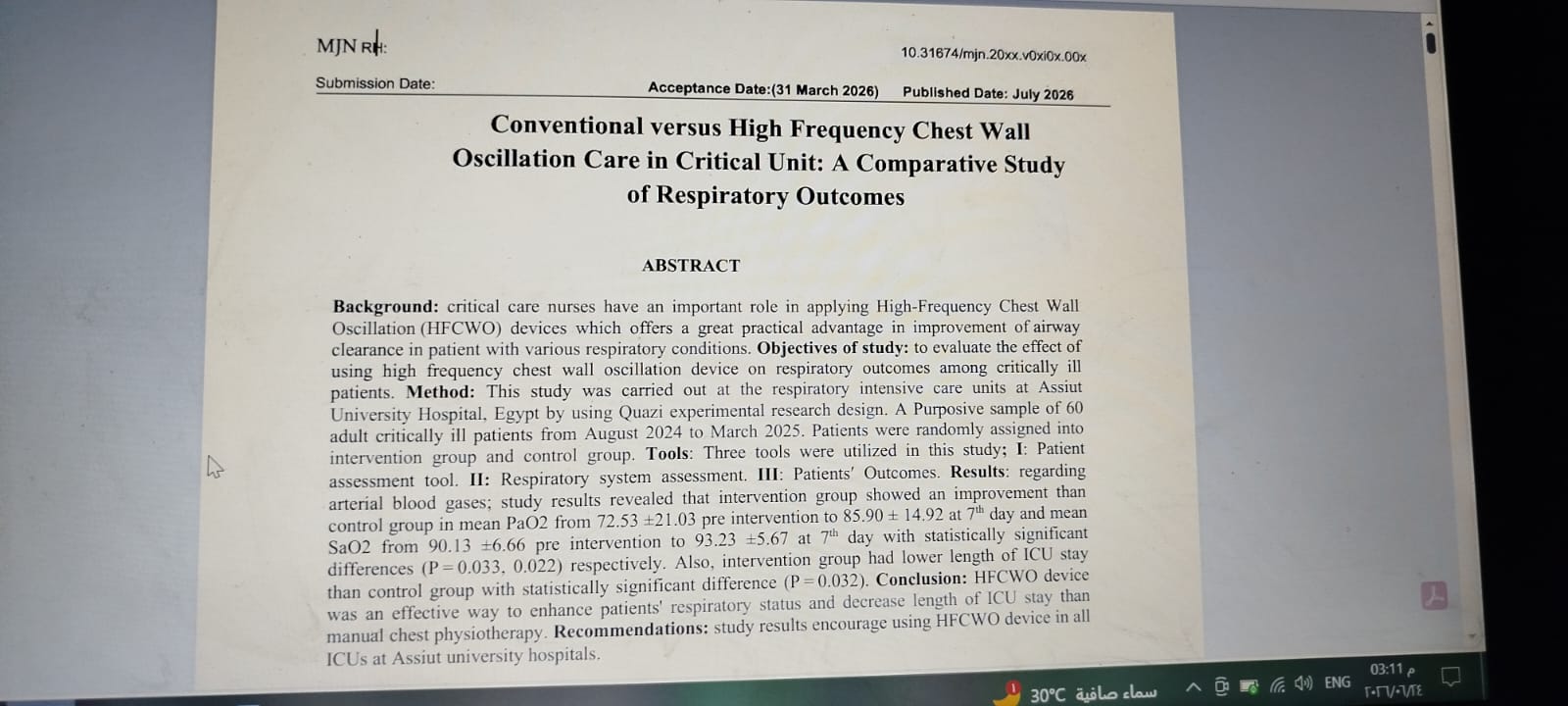
Background: critical care nurses have an important role in applying High-Frequency Chest Wall Oscillation (HFCWO) devices which offers a great practical advantage in improvement of airway clearance in patient with various respiratory conditions. Objectives of study: to evaluate the effect of using high frequency chest wall oscillation device on respiratory outcomes among critically ill patients. Method: This study was carried out at the respiratory intensive care units at Assiut University Hospital, Egypt by using Quazi experimental research design. A Purposive sample of 60 adult critically ill patients from August 2024 to March 2025. Patients were randomly assigned into intervention group and control group. Tools: Three tools were utilized in this study; I: Patient assessment tool. II: Respiratory system assessment. III: Patients Outcomes. Results: regarding arterial blood gases; study results revealed that intervention group showed an improvement than control group in mean PaO2 from 72.53 ±21.03 pre intervention to 85.90 ± 14.92 at 7th day and mean SaO2 from 90.13 ±6.66 pre intervention to 93.23 ±5.67 at 7th day with statistically significant differences (P = 0.033, 0.022) respectively. Also, intervention group had lower length of ICU stay than control group with statistically significant difference (P = 0.032). Conclusion: HFCWO device was an effective way to enhance patients' respiratory status and decrease length of ICU stay than manual chest physiotherapy. Recommendations: study results encourage using HFCWO device in all ICUs at Assiut university hospitals.