

November 18, 2025
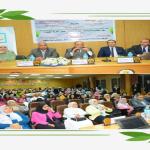
Under the patronage of Professor Ahmed El-Minshawy, President of Assiut University, the Community Service and Environmental Development Sector held its regular meeting on Tuesday, 18 November, to discuss a proposal to establish a civil society organization as an executive arm in accordance with Law 149/2019. The proposed entity aims to open new developmental avenues for the sector and enhance the University’s capacity to engage with external communities, particularly through launching developmental projects.
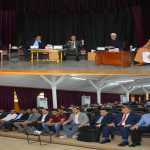
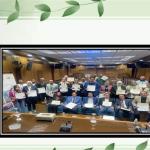
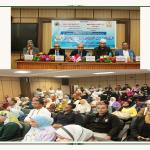
The meeting was chaired by Professor Mohamed Ahmed Adawy, Vice President for Community Service and Environmental Development Affairs, with the attendance of faculty vice deans and representatives of civil society organizations and development agencies. The gathering addressed the sector’s recent activities and achievements, which reflect the University’s leading role in community service, environmental development, and support for the local community across multiple fields.
Professor El-Minshawy affirmed the University’s commitment to strengthening its developmental and societal role. He stressed that the University continues to harness its scientific and human resources to support national plans for sustainable development, raise community awareness, empower youth, and foster entrepreneurship—efforts that reinforce the University’s position as a trusted hub of expertise supporting comprehensive development in Assiut and the wider region.
At the outset of the session, Professor Adawy extended his appreciation to Professor Abdel-Aleem, former Acting Vice President for the sector, praising his contributions during his tenure and the tangible achievements recorded under his leadership.
Professor Adawy noted that the meeting reviewed the developmental activities of various University faculties, including initiatives related to sustainable development, environmental preservation, resource rationalization, energy efficiency, and civil protection. The meeting also discussed training plans on the use of firefighting equipment and emergency evacuation procedures.
The Vice President also followed up on the execution of decisions from the previous session, noting that the sector remains committed to advancing initiatives that support national sustainable development efforts, while promoting a culture of community engagement, entrepreneurship, and innovation among students.
Professor Adawy emphasized the importance of adhering to precautionary measures during the coming period in light of expected weather fluctuations and rainfall with the onset of winter. The council also discussed a proposal from the Faculty of Computers and Information to launch a series of awareness caravans on cybercrimes and safe internet use for secondary school students and employees of government institutions.
The meeting further addressed directives issued by the national leadership concerning combating smoking on university campuses. Attendees reaffirmed the prohibition of smoking in buildings and indoor facilities and stressed the need to implement graduated penalties for violations.
In addition, the council discussed mechanisms to enhance faculty-based development projects, support entrepreneurial practices, and establish student-led companies. Members also agreed to commence developmental caravans across villages and districts in the governorate and reviewed a proposal to establish a Center for Athlete Support.
The council examined a proposal submitted by the University’s Community Engagement Support Center regarding the establishment of a civil society organization to serve as an executive arm for the Community Service and Environmental Development Sector, thereby strengthening the University’s ability to implement developmental projects in partnership with civil society organizations and the private sector.
At the conclusion of the meeting, Professor Adawy expressed his appreciation to all participants in the sector’s activities, underscoring the importance of continued cooperation and coordination between the University’s faculties and external partners. Such collaboration, he noted, reinforces the University’s mission in community service and environmental development and consolidates its role as a cornerstone of comprehensive development.