

November 5, 2025
Key messages from the seminar:
- Responsible and informed media is the first line of defense in times of crisis.
- Credibility and professional responsibility are essential to effective crisis communication.
- Speed in reporting must never come at the expense of accuracy and truth.
- Preparing media professionals who are well-versed in ethical standards is a pressing necessity.
- Balancing freedom of expression with the protection of social security is a national requirement in the age of social media.
- The media is not merely a transmitter of events. It is a producer of public consciousness.
- Verifying sources is vital in an era defined by digital speed.
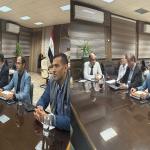
As part of Assiut University’s commitment to strengthening community awareness regarding the role of media in crisis management, the Faculty of Science organized an educational seminar titled “The Role of Media in Raising Awareness and Documenting Events During Crises.” The event was held under the patronage of Professor Ahmed El-Minshawy, President of Assiut University, and supervised by Professor Mahmoud Abdel-Aleem, Vice President for Community Service and Environmental Development; Professor Aboubakr El-Tayeb, Dean of the Faculty of Science; and Professor Essam Fadl, Vice Dean for Community Service and Environmental Development. The seminar featured the participation of Professor Rehab El-Dakhaly, Head of the Department of Media at the Faculty of Arts and Media Advisor to the University President.
Professor El-Minshawy emphasized that the media today holds significant power in shaping public awareness and guiding public opinion. Its role, he noted, has expanded beyond conveying news to becoming an essential tool in crisis management and in safeguarding social stability.
He added that responsible handling of information has become indispensable in the digital age, requiring well-trained media professionals capable of verifying sources and analyzing events objectively. He affirmed that the university, through such seminars, aims to strengthen professional awareness and counter misinformation by promoting a culture of accuracy and responsibility.
In his remarks, Professor El-Tayeb welcomed participants and stressed the Faculty of Science’s commitment to organizing awareness activities that contribute to building an informed student community. He noted that the media has become a central instrument in crisis management and in combating rumors, and highlighted the faculty’s dedication to preparing graduates capable of analyzing events and responding to challenges with insight and awareness.
Professor Fadl expressed his appreciation for the seminar, describing it as a practical model for the role media should play in supporting societal stability during crises through disseminating accurate information and strengthening trust between citizens and state institutions.
Professor El-Dakhaly delivered the seminar’s main lecture, expressing her pleasure in participating and commending the Faculty of Science for its continued support of intellectual and awareness-building activities that enhance the university’s role in serving the community.
In her presentation, Professor El-Dakhaly addressed several key themes, highlighting the media’s central role in crisis management, awareness-building, and shaping public opinion. She explained that a crisis is a sudden situation that threatens societal stability, and that managing it requires effective communication grounded in verification and accurate dissemination of information.
She noted that during crises, the media fulfills three essential functions: raising awareness through reliable information and combating rumors; guiding public behavior towards responsible action; and documenting events as the living memory of society.
Using COVID-19 as a clear example of crisis communication, she warned against the risks of uncontrolled publishing on social media and stressed that journalistic exclusivity must never override credibility. Verifying sources, she emphasized, is both a professional and ethical obligation.
Professor El-Dakhaly also highlighted the need to prepare media practitioners who can respond to crises with professionalism and awareness, calling for adherence to media ethics and for balancing freedom of expression with the protection of community security.
She concluded by reaffirming that informed and responsible media is the first line of defense in times of crisis, and that truthful words and reliable information are key to maintaining stability and preventing disorder.
The seminar witnessed strong engagement from attendees, who expressed appreciation for the seminar’s rich content and praised the organization of such events aimed at strengthening community and media literacy.