June 18, 2026
Professor Ahmed El-Minshawy Commends Assiut University Students for Helping 70,339 Citizens Achieve Literacy Between 2021 and 2026 and Reaffirms the University's Commitment to the National Literacy Initiative
Professor Ahmed El-Minshawy, President of Assiut University, praised the University's outstanding achievements in the field of literacy and adult education, emphasizing that students' success in helping 70,339 citizens achieve literacy between 2021 and 2026 reflects the University's effective community engagement and its commitment to fulfilling its societal role alongside its educational and research mission.
He noted that this achievement demonstrates the University's students' awareness of the importance of contributing to national priorities and highlights the success of the University's partnership with the General Authority for Adult Education in supporting the state's efforts to promote literacy and improve educational awareness throughout the community.
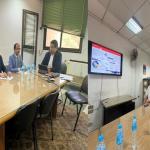
In this context, Professor Mohamed Adawy, Vice President for Community Service and Environmental Development, chaired a meeting of the Higher Committee for Adult Literacy to review the University's ongoing efforts in literacy and adult education and discuss proposals aimed at enhancing implementation mechanisms and increasing achievement rates.
The meeting was attended by Professor Hassan Huweil, Dean of the Faculty of Education; Professor Mohamed Abourahab, Vice Dean of the Faculty of Arts for Education and Student Affairs; Professor Iman Abdel Aal, Vice Dean of the Faculty of Social Work for Education and Student Affairs; Professor Mohamed Abdel Baset, Vice Dean of the Faculty of Specific Education for Community Service and Environmental Development; Professor Howaida Mahmoud Sayed, Vice Dean of the Faculty of Education for Education and Student Affairs; Dr. Ahmed Abdallah El-Sagheer, Director of the Adult Education Center at the Faculty of Education; Mr. Nady Ibrahim Abdel Aal, Director of the Assiut Branch of the General Authority for Adult Education; Ms. Mofida Adel El-Amir, Coordinator of Cooperation between the University and the Authority and Director General of the Information Center at the Authority's Assiut Branch; and Mr. El-Husseiny El-Tayeb, Director of the Technical Office of the Vice President for Community Service and Environmental Development.
Professor Mohamed Adawy affirmed that Assiut University attaches great importance to literacy initiatives as part of its community mission and national responsibility toward the people of Assiut Governorate. He emphasized the University's commitment to mobilizing its academic and human resources to support the General Authority for Adult Education and to strengthening cooperation under the partnership protocol signed between the two institutions.
The Vice President explained that the meeting reviewed the University's achievements within the National Literacy Project. University students successfully helped 4,918 citizens achieve literacy during the October 2025 examination cycle and 3,561 citizens during the January 2026 cycle, bringing the total number of beneficiaries between 2021 and 2026 to 70,339 citizens across Assiut Governorate.
He added that the committee discussed several proposals to enhance the project's effectiveness, including establishing clear and unified regulations governing the implementation and follow-up of University Council Resolution No. 734 (2022), which requires students to help two individuals achieve literacy as a prerequisite for graduation. The meeting also recommended organizing training programs for students during October and November to familiarize them with adult education methodologies and teaching techniques, thereby improving performance and achieving more effective outcomes.
Professor Mohamed Adawy also stressed the importance of recognizing and rewarding outstanding student participants in appreciation of their significant voluntary contributions to society and to encourage continued participation in literacy initiatives, which represent a key pillar of human development and sustainable development efforts.