1.3.4 Programs to assist students who fall into the bottom 20% of household income group (or a more tightly defined target) in the country to successfully complete their studies
1.3.4 Programs to assist students who fall into the bottom 20% of household income group (or a more tightly defined target) in the country to successfully complete their studies
SDG1
Details:
Programmers and initiatives helping students from the lowest 20% of household-income groups complete their university studies successfully
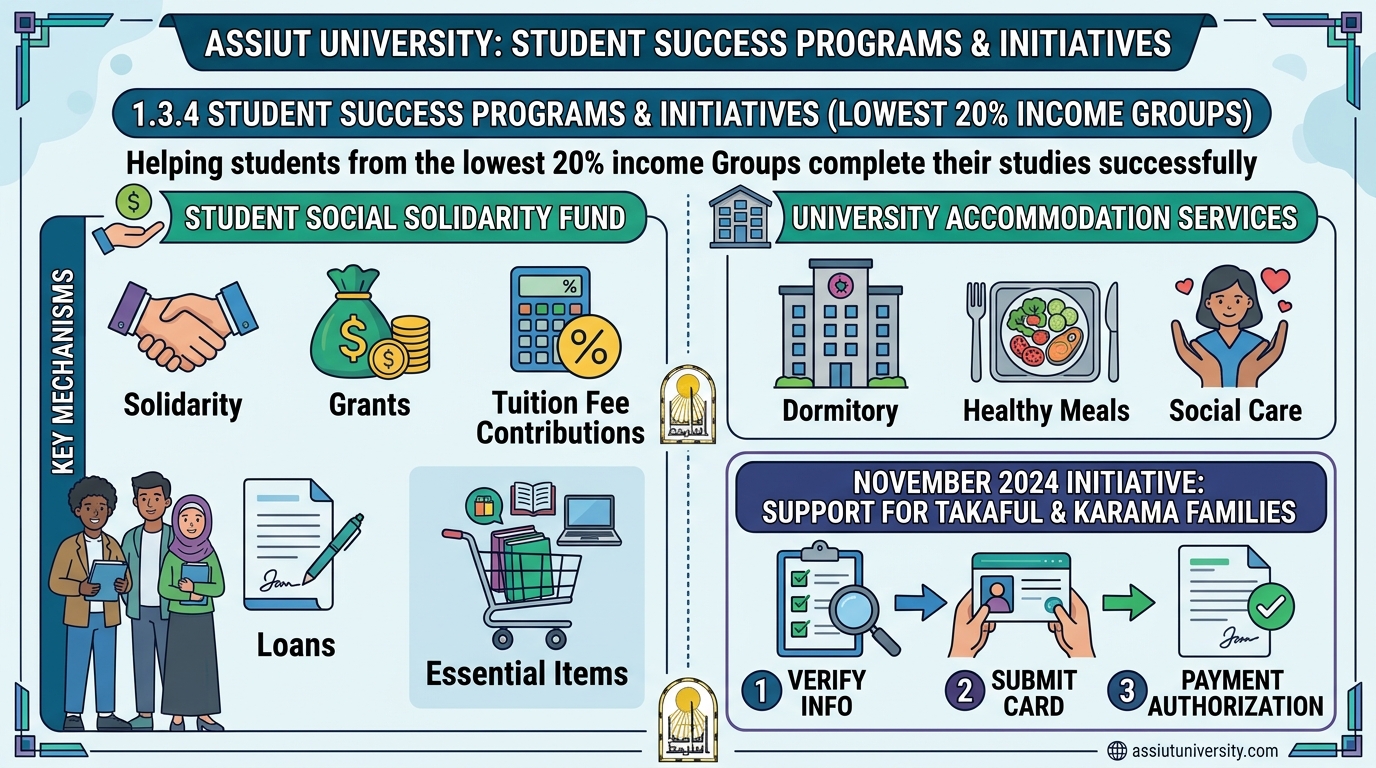
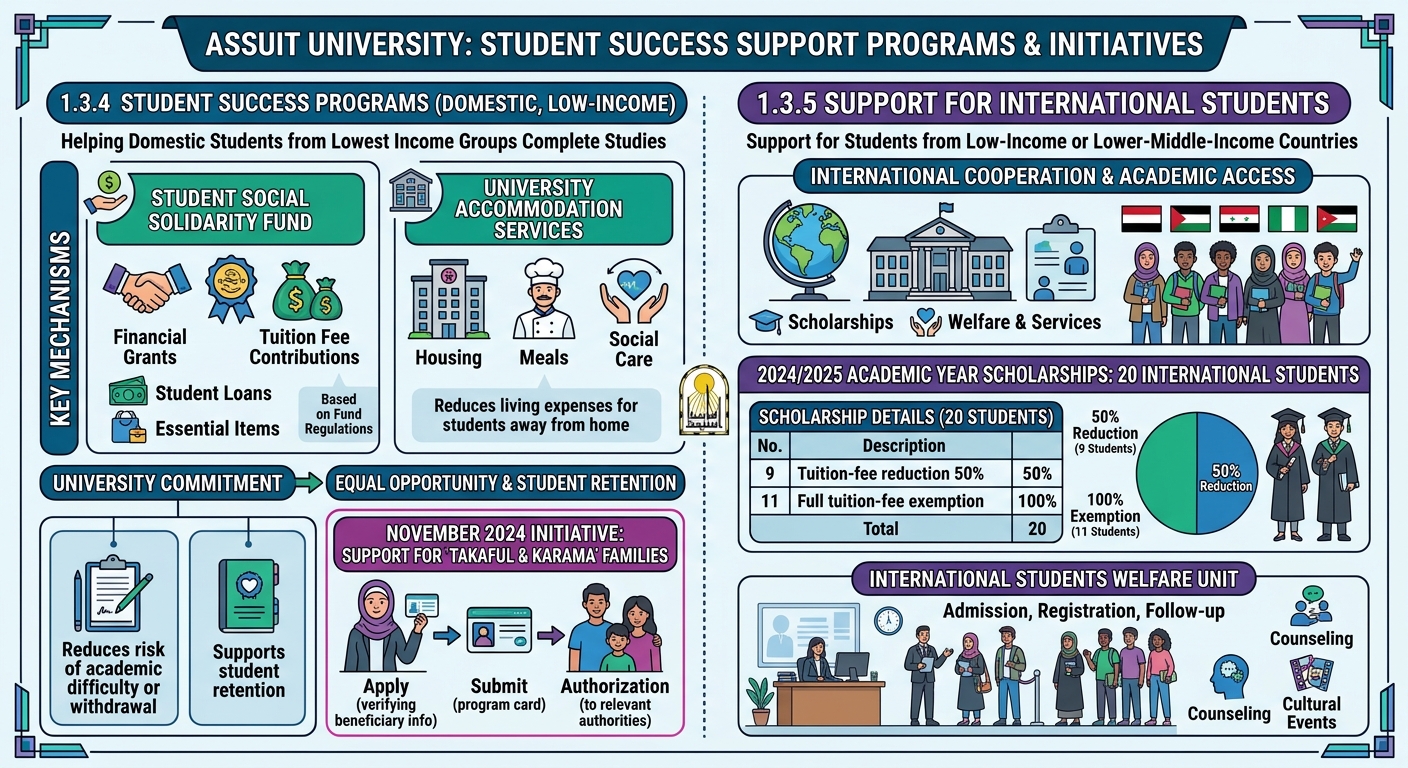
Assiut University adopts a range of programmes and initiatives to support students facing financial difficulties, helping them continue and successfully complete their university studies and reducing the impact of financial circumstances on their educational opportunities. The Student Social Solidarity Fund is one of the principal mechanisms, offering various forms of assistance, including financial grants, contributions toward tuition fees, student loans, and certain essential items for eligible students, in accordance with the Fund's regulations.
University accommodation services, including housing, meals, and social care, also help reduce students' living expenses, particularly for students living away from home whose families face economic difficulties.
These programmes reflect the University's commitment to equal educational opportunities, supporting student retention and reducing the risk of academic difficulty or withdrawal for financial reasons. Although there is no documented evidence that these programmes are exclusively allocated to students from the lowest 20% of household-income groups, they constitute institutional mechanisms for supporting students in financial need.
In November 2024, the Social Solidarity Unit at Assiut University announced procedures for receiving applications from students from families benefiting from the "Takaful and Karama" program who wished to receive assistance with tuition fees. These procedures included verifying beneficiary information and submitting the program card and payment authorization to the relevant university authorities.