

Drought-Tolerant Landscaping to Minimize Water Usage
Institutional Status: Yes — Smart Irrigation & Climate-Resistant Agriculture
Assiut University adopts water-efficient landscaping practices and advanced irrigation technologies to minimize water consumption while maintaining green spaces across the campus. These efforts include:
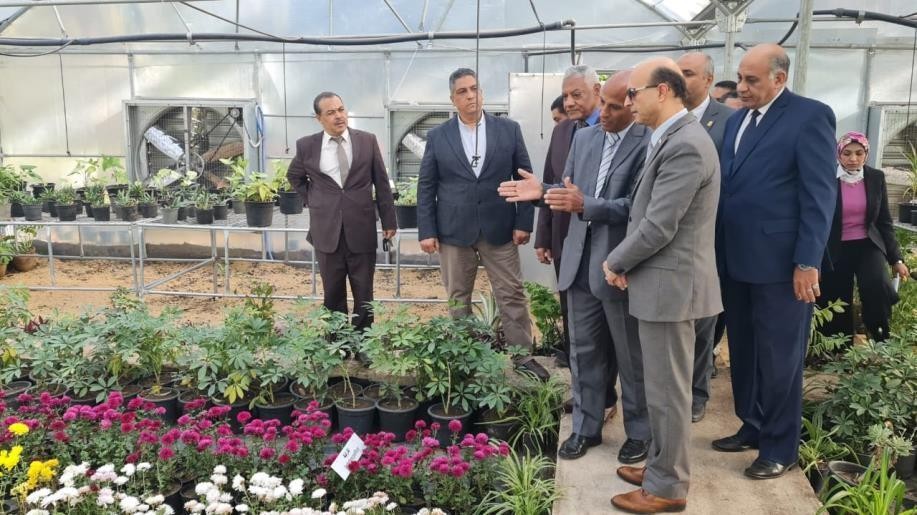
Operation of a modern multi-span greenhouse, inaugurated in December 2023, housing approximately 3,000 ornamental plants. The greenhouse is equipped with automated mist irrigation and fertigation systems that optimize water and nutrient use while supporting plant growth.
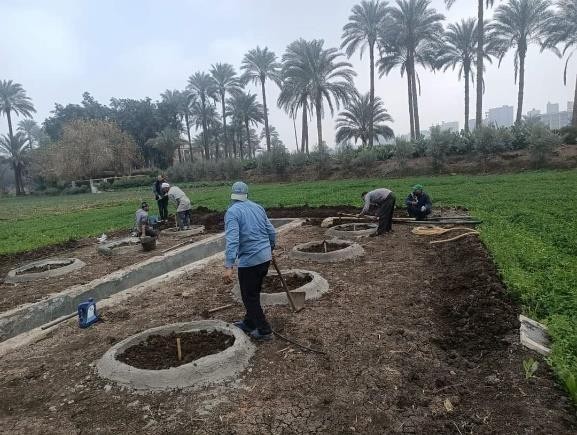
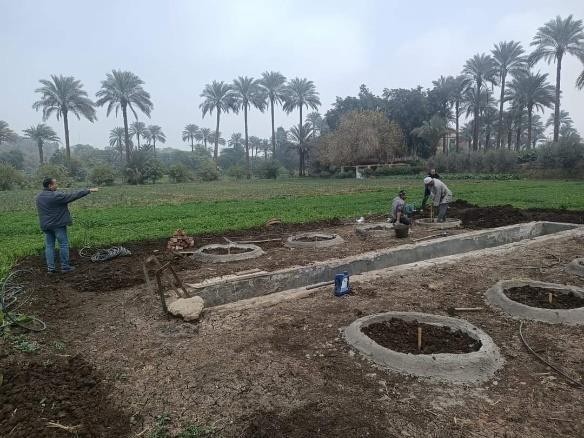
Use of drainage lysimeters at the Farm of the Department of Soil and Water Sciences, where eight lysimeter units are used to accurately determine crop evapotranspiration requirements. This enables precise irrigation scheduling and helps prevent excessive water application.
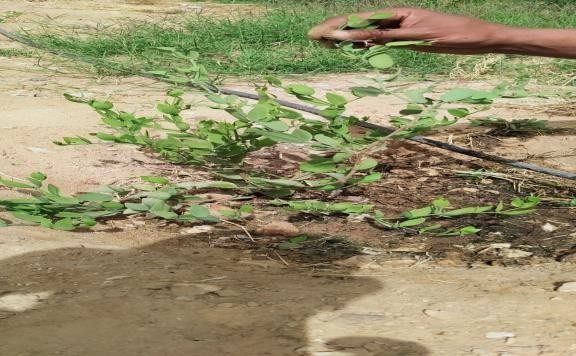
Cultivation of drought-tolerant plant species, including Jojoba (Simmondsia chinensis), often referred to as “green gold” due to its economic value and low water requirements. These crops are grown under drip irrigation systems to maximize water-use efficiency.
Utilization of non-potable water sources for landscape irrigation, including direct pipeline connections supplying irrigation water to campus gardens and green areas, thereby reducing dependence on treated drinking water resources.
The treatment of sewage water at the campus of Assiut University according to the Egyptian code 2015 enabled the reuse of treated water in agriculture. This water is pumped into special lines that contribute to the irrigation of green areas and trees on campus. Moreover, the water generated from the air condition appliances are collected with plastic pipes and reused in irrigation of green areas nearby.
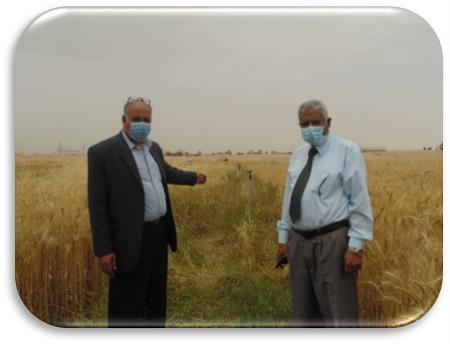
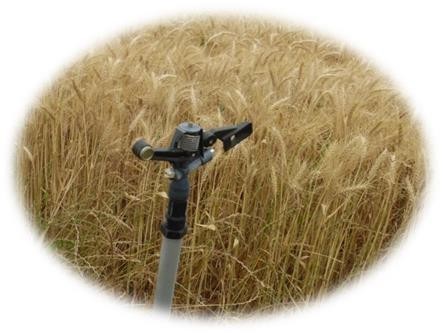
The extension farm in the Assiut Valley is about 200 acres, which is a modern sandy land of which about 80 acres have been cultivated and modern irrigation methods such as sprinkler irrigation and drip irrigation are used to rationalize water consumption in them. Due to the high costs of establishing modern irrigation networks, work is underway to gradually install modern irrigation networks that increase in area annually. The drip irrigation has been actually installed in 10 acres cultivated with Jojoba and 4 acres cultivated with wheat. As for the rest of the cultivated area, it is irrigated by developed surface irrigation methods, and to further rationalize water consumption in those areas, a large area of it has been retained. The work of replacing and renewing traditional irrigation methods is carried out annually with modern irrigation methods, as it is intended to irrigate the entire area of this farm by sprinkler and drip irrigation methods.
These initiatives demonstrate the University’s commitment to sustainable landscape management, climate resilience, and efficient water resource utilization. By integrating drought-tolerant vegetation, precision irrigation technologies, and alternative water sources, Assiut University contributes to water conservation and environmental sustainability across its campus.
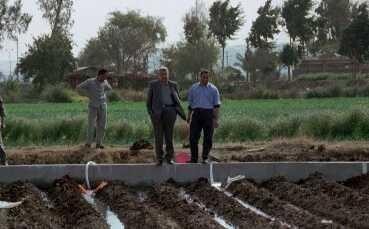
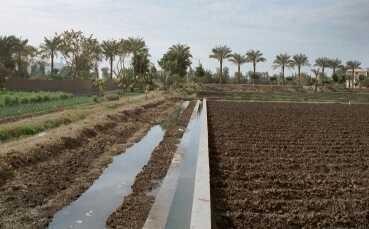
Irrigation in lines, irrigation in pipes and irrigation in small basins.Irrigation in lines, irrigation in pipes and irrigation in small basins.
|
|
Lysimeters in the farm of the Land and Water Department to determine quantitatively the amount of water needed for each crop minimize the use of irrigation water. | Lysimeters in the farm of the Land and Water Department to determine quantitatively the amount of water needed for each crop minimize the use of irrigation water. |
|
Temperature/humidity controlled multispan greenhouse saving irrigation water. |
|
|
Drip irrigation system in acres cultivated with Jojoba and acres cultivated with wheat. | Drip irrigation system in acres cultivated with Jojoba and acres cultivated with wheat. |
Official Evidence Links & Documentation: |