

First-Generation Students
Assiut University is committed to promoting equal opportunities in higher education and providing access to university education for students from diverse social and economic backgrounds. This contributes to supporting social mobility and reducing inequalities in access to education. In this context, monitoring the number of students enrolling at the University for the first time and identifying the proportion of students classified as first-generation students are important indicators for assessing the University's contribution to expanding access to higher education for groups that may face social or economic challenges.
During the 2024/2025 academic year, the figures for these students were as follows:
| Statement | Statement | Number of students |
|---|---|---|
| 10.2.1 | Number of students who began a degree | 23217 |
| 10.2.2 | Number of first-generation students who began a degree | 12096 |
| 10.2.3 | Total number of students | 105782 |
| Percentage of first-generation students to the Total number of first-year students. | Percentage of first-generation students to the Total number of first-year students. | 52.1% |
| Percentage of first-year students to the total number of students at the university | Percentage of first-year students to the total number of students at the university | 21.95% |
| Percentage of first-generation students to the total number of new university students | Percentage of first-generation students to the total number of new university students | 11.4% |
Data shows that Assiut University plays a significant role in expanding access to higher education for students who are the first in their families to pursue higher education. The number of students who began their university studies reached 23,217, including 12,096 first-generation students, representing approximately 52.1% of the total student body.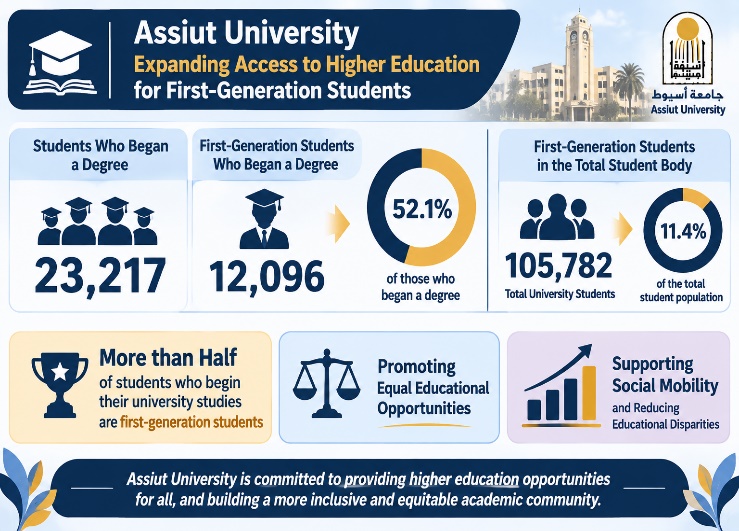
This percentage indicates that first-generation students constitute more than half of all students starting their university journey, reflecting the university's crucial role in providing higher education opportunities to diverse social groups and promoting the principle of equal educational opportunities, thus contributing to reducing disparities related to families' educational backgrounds.
Considering the university's total student body of 105,782, the number of first-generation students who began their university studies represents approximately 11.4% of the total student population.