The Community Service and Environmental Development Sector at the Faculty of Medicine, in cooperation with the Department of Tropical Medicine and Gastroenterology, is honored to invite you to the fifth Community Environment Day, under the theme "Heatstro

The Community Service and Environmental Development Sector at the Faculty of Medicine, in cooperation with the Department of Tropical Medicine and Gastroenterology, is honored to invite you to the fifth Community Environment Day, under the theme "Heatstroke: Be Calm; Be Reassured."

The Community Service and Environmental Development Sector at the Faculty of Medicine, in cooperation with the Department of Tropical Medicine and Gastroenterology, is honored to invite you to the fifth Community Environment Day, under the theme "Heatstroke: Be Calm; Be Reassured."


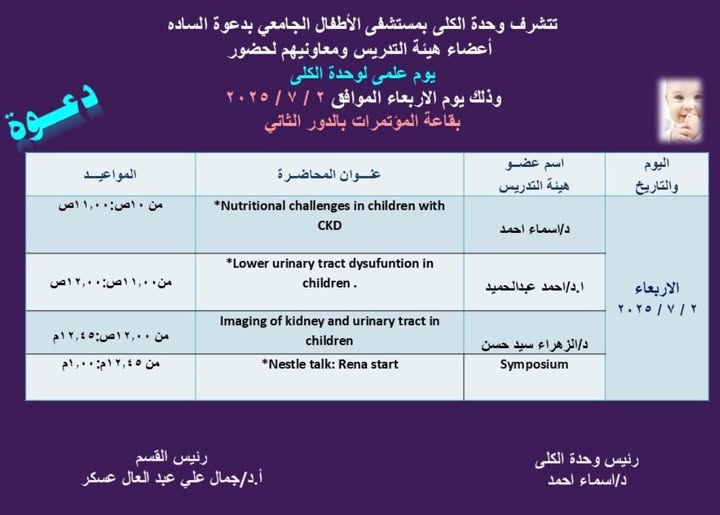
Invitation to attend a scientific day for the Kidney Unit at the University Children's Hospital, in cooperation with the Urology Unit and the Diagnostic Radiology Unit.

Invitation to attend a scientific day for the Kidney Unit at the University Children's Hospital, in cooperation with the Urology Unit and the Diagnostic Radiology Unit.

Invitation to attend a scientific day for the Kidney Unit at the University Children's Hospital, in cooperation with the Urology Unit and the Diagnostic Radiology Unit.


Ranking breast cancer drugs and biomarkers identification using machine learning and pharmacogenomics

Research Abstract

Breast cancer is one of the major causes of death in women worldwide. It is a diverse illness with substantial intersubject heterogeneity, even among individuals with the same type of tumor, and customized therapy has become increasingly important in this sector. Because of the clinical and physical variability of different kinds of breast cancers, multiple staging and classification systems have been developed. As a result, these tumors exhibit a wide range of gene expression and prognostic indicators. To date, no comprehensive investigation of model training procedures on information from numerous cell line screenings has been conducted together with radiation data. We used human breast cancer cell lines and drug sensitivity information from Cancer Cell Line Encyclopedia (CCLE) and Genomics of Drug Sensitivity in Cancer (GDSC) databases to scan for potential drugs using cell line data. The results are 

Research Authors
Aamir Mehmood, Sadia Nawab, Yifan Jin, Hesham Hassan, Aman Chandra Kaushik, Dong-Qing Wei
Research Date
Research Department
Research Member
Research Year
2023

Molecular Dynamics Simulation and Pharmacoinformatic Integrated Analysis of Bioactive Phytochemicals from Azadirachta indica (Neem) to Treat Diabetes Mellitus

Research Abstract

Diabetes mellitus is a chronic hormonal and metabolic disorder in which our body cannot generate necessary insulin or does not act in response to it, accordingly, ensuing in discordantly high blood sugar (glucose) levels. Diabetes mellitus can lead to systemic dysfunction in the multiorgan system, including cardiac dysfunction, severe kidney disease, lowered quality of life, and increased mortality risk from diabetic complications. To uncover possible therapeutic targets to treat diabetes mellitus, the in silico drug design technique is widely used, which connects the ligand molecules with target proteins to construct a protein‐ligand network. To identify new therapeutic targets for type 2 diabetes mellitus, Azadirachta indica is subjected to phytochemical screening using in silico molecular docking, pharmacokinetic behavior analysis, and simulation‐based molecular dynamic analysis. This study has analyzed around 63 …

Research Authors
Asif Abdullah, Partha Biswas, Md Sahabuddin, Afiya Mubasharah, Dhrubo Ahmed Khan, Akram Hossain, Tanima Roy, Nishat Md R Rafi, Dipta Dey, Md Nazmul Hasan, Shabana Bibi, Mahmoud Moustafa, Ali Shati, Hesham Hassan, Ruchika Garg
Research Department
Research Member
Research Year
2023

Role of Shear Wave Elastography in the diagnosis and assessment of severity of acute pancreatitis

Research Authors
ZGM Zeinab R Mohamed 1, Nahed A Makhlouf 2٭, Ehab F Moustafa3, Gehan S ...
Research Date
Research Journal
Egyptian journal of Radiology and nuclear medicine
Research Year
2024

Prevalence, knowledge, and attitude toward complementary and alternative medicine use among patients with chronic hepatitis C in Upper Egypt

Research Authors
SS Abdel-Moneim, AF Al-Sayed Hasanain, ZR Mohammed
Research Date
Research Journal
Journal of Current Medical Research and Practice 2 (3), 162-166
Research Year
2017

Extended-spectrum beta-lactamase genes among Gram negative bacilli isolates from Egyptian children with diarrhea in Assiut University

Research Abstract

Background: Faecal carriage of ESBL-producing bacteria is a potential risk for transmission and infection. Antibiotic resistance in diarrheal children is considered a risk factor for these young aged ones and limit treatment options. This study aimed to investigate the frequency of ESBL-producing Gram negative bacilli (GNB) phenotypically by Vitek and genotypically by PCR. Method: Seventy-three diarrheal isolates from outpatient children at of age range from less than 6 months to 18 months were isolated. Bacterial strains were identified and subjected to antimicrobial susceptibility testing by using the automated Vitek 2 compact system. All isolates were screened for ESBL phenotypically by Vitek and genotypically by PCR for blaCTXM, blaTEM and blaSHV. Results: Seventy three different GNB identified by Vitek system. The frequency of Escherichia coli was 68.5%, Acinetobacter haemolytica was 7 /73 (9.6%), Pseudomonas species (sp.) 4/73 (5.5%), Proteus mirabilis was (2.7%), Salmonella sp. was (1.4%), Enterobacter sp. was (6.8%), Aeromonas salmonicida was (1.4%), and Klebsiella was (4.1%). ESBL carriage was significantly high among isolated strains (64.4 %). High frequency of multidrug resistance (MDR) (90.4%) was found. High resistance was detected to ampicillin (98.6%), followed by cefazolin (93.2%) and ceftazidime (82.2%), trimethoprim-sulphamethoxazol (76.7%). Resistance to carbapenems was detected as (16.4%). blaCTX-M positive was (78.1%), blaTEM positive (53.4%), blaSHV positive (31.5%). Conclusions: The current study reported a high rate of faecal carriage of ESBL-producing and MDR GNB and children below 2 years of age. Resistance was observed to the available antimicrobials that are used for children in treatment. This leaves few treatment options for infections caused by these bacteria.

Research Authors
ragaa Sedeik Rashwan 1 Shereen M. Galal 2 Doaa M. Abd EL-kareem 3 Aliaa M.A. Ghandour 1 Rawhia F. Abd El-Hamid 1
Research Date
Research Journal
Microbes and Infectious Diseases
Research Member
Research Pages
13
Research Publisher
Faculty of Medicine, Zagazig University
Research Vol
4
Research Website
https://mid.journals.ekb.eg/article_312429.html
Research Year
2023

Multidrug resistant Enterococci as a community acquired infection in diarrheal cases of children in Assiut University

Research Abstract

Background and Objectives: Enterococci causes many serious and life-threatening infections. Enterococci may be the cause of diarrhea in children. Multidrug-resistant (MDR) Enterococci limits treatment options. So, the aim of our study was to detect the frequency and the antibiotic resistance profile, both phenotypically and genotypically, of MDR Enterococci isolated from the stools of children suffering from gastroenteritis who needed hospitalization. Materials and Methods: Enterococci were isolated from stool samples from children. One hundred ten (110) infants (in patients) with typical signs of gastroenteritis (nausea, vomiting, abdominal pain, diarrhea). The Vitek 2 Compact System is used for identification and antimicrobial susceptibility testing. Drug resistance genes (ermB, aph(3′)IIIa, and tetM) and virulence genes (esp) were identified using molecular techniques. Results: Thirty-six isolates of Enterococci were diagnosed phenotypically by routine lab examination and Vitek2 followed by genotypic characterization by multiplex PCR for three resistant genes: ermB (100%), aph(3′)IIIa (63.9%) and tetM (91.7%) and one virulence gene (esp (25%)). The frequency of Enterococci among studied patients was 32.7% (36/110). Most of the Enterococci isolated from stool were Enterococcus faecuim (86.1%). MDR Enterococci was found to be 94.4% (34/36) in total isolates. Conclusion: MDR Enterococci was isolated in community acquired diarrhea in young aged (less than 24 months) children. More than one resistance gene: ermB, aph(3′)IIIa, tetM and virulence gene (esp) were detected in isolates. The presence of MDR strains is risky at a young age as it limits treatment options. Drug-resistant genes may be transmitted to a child through a carrier mother or cross infection from the hospital.

Research File
Research Journal
Microbes and Infectious Diseases
Research Member
Research Pages
12
Research Publisher
Faculty of Medicine, Zagazig University
Research Vol
4
Research Website
https://mid.journals.ekb.eg/article_319863.html
Research Year
2023

Imbalance of Follicular Double Positive and Follicular Double Negative T cells in Ulcerative Colitis Patients

Research Abstract
Background: Double-positive (DP) and double-negative (DN) thymocytes are well-characterized stages of T cell development in the thymus. Disturbances in their levels have been previously observed in chronic inflammatory diseases and autoimmune disorders. Objective: This study aimed to analyze follicular DP and DN T cell levels in ulcerative colitis patients' peripheral blood and colon tissue biopsy and determine whether their levels correlate with disease severity. Methodology: This study involved 22 patients with ulcerative colitis (UC) and 18 healthy controls. Flow cytometry was used to measure the total levels of DP and DN T cells and their subsets in each participant's peripheral blood and colon tissue biopsy. Results: DP T cells were higher in tissue than in the blood samples. DN T cells were lower in tissue than the blood but higher in patients than control tissues. Differences were observed in the tissue levels of follicular DP and DN cells and their expression levels of CD154 compared with blood and in severe compared with non-severe cases. Conclusion: Levels of DP and DN follicular T cells are higher in the tissue of UC patients than in blood, with higher expression of CD154 in tissues. Levels of these cells are higher in more severe cases and show good efficiencies in predicting disease severity. Further research is needed to assess whether these cells have a role in the inflammatory process in UC.
Research Date
Research File
Research Journal
Egyptian Journal of Medical Microbiology
Research Member
Research Publisher
the Egyptian society of medical microbiology
Research Vol
34
Research Website
https://ejmm.journals.ekb.eg/article_411657.html
Research Year
2025
Subscribe to