


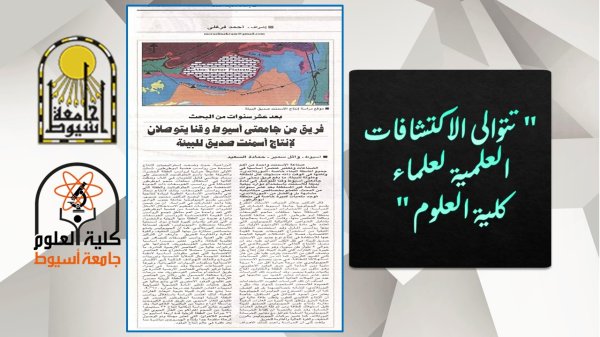
The development of a new cost effective and environment-friendly cement material from the byproducts of the phosphate mines in Abu Tartur Area.
Visit to the Ultra Medical Factory in the Arab El Awamer industrial area, east Assiut



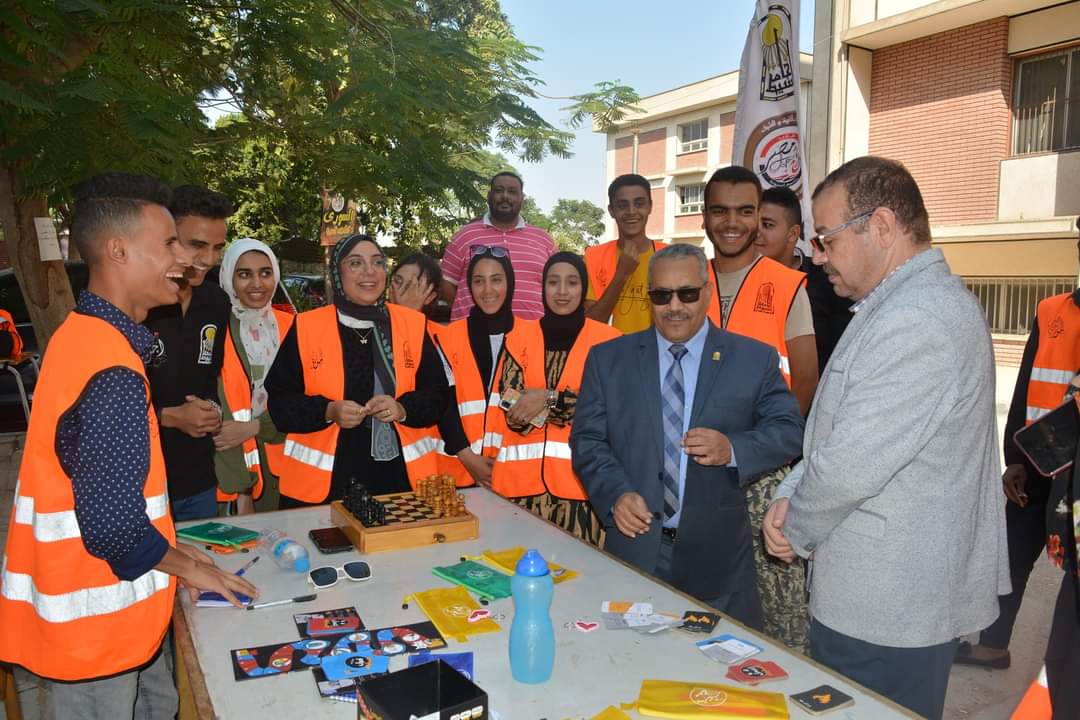
The Faculty of Science held a one-day visit to El Meharaq Monastery in Assiut city and to ancient Egyptian Monuments built 3600 to 4300 years B.C in Meer.



Digital Egypt Pioneers Initiative


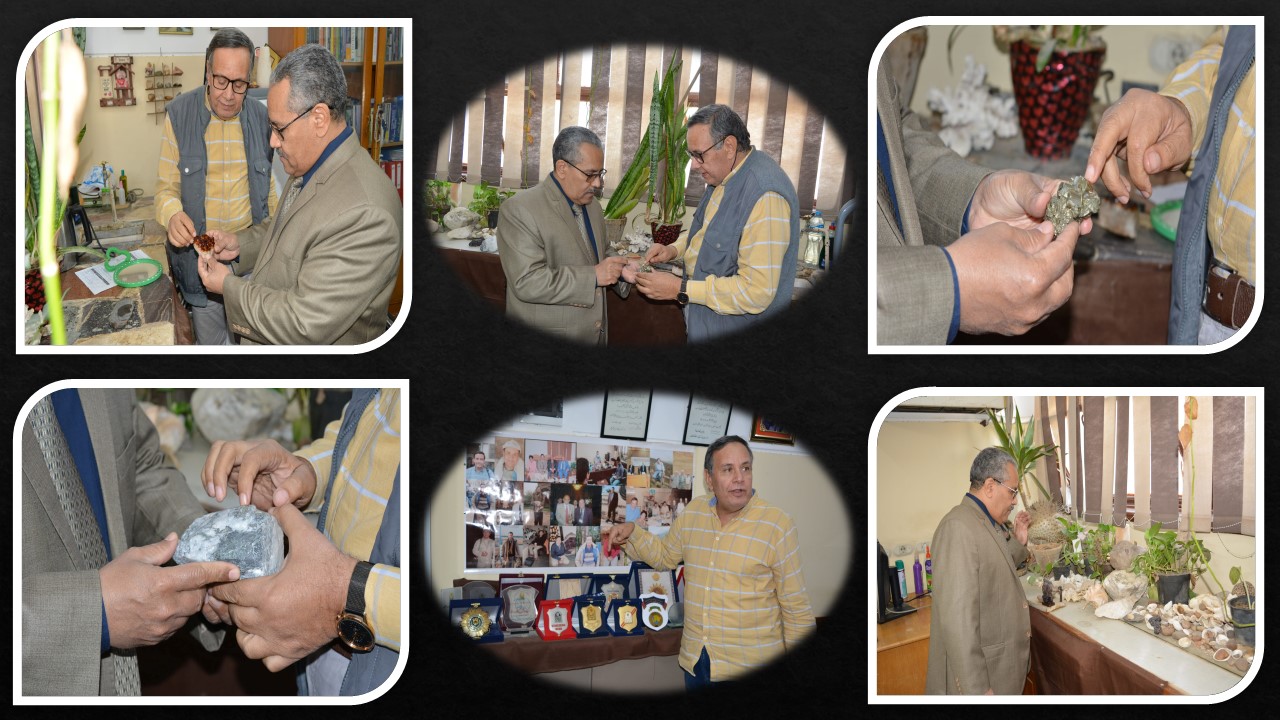
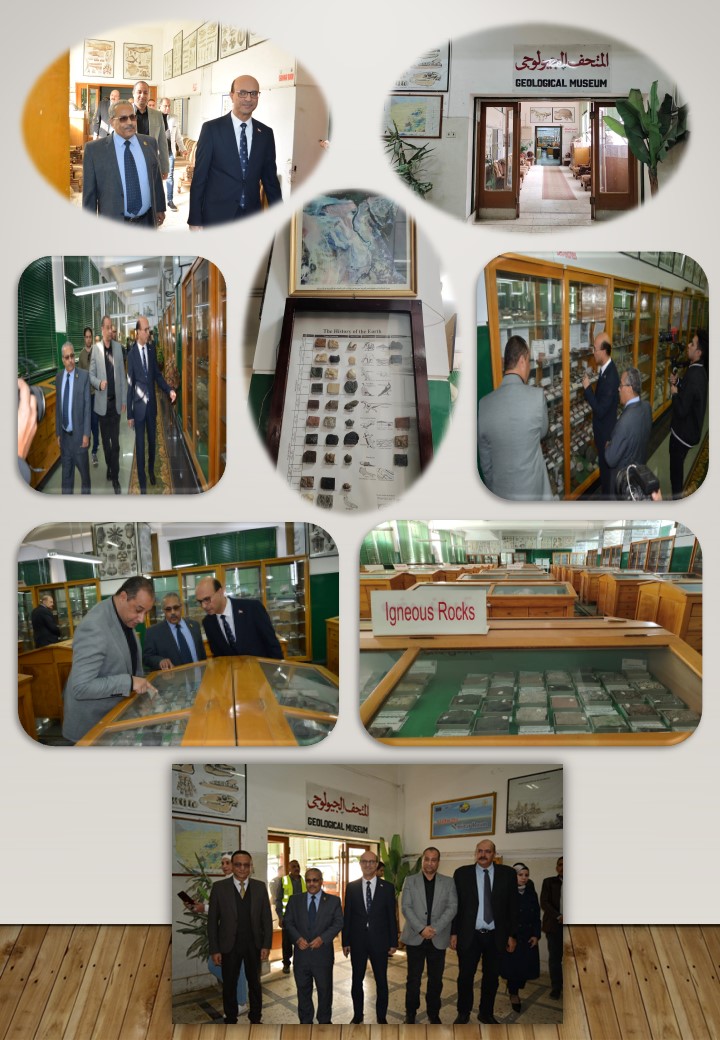
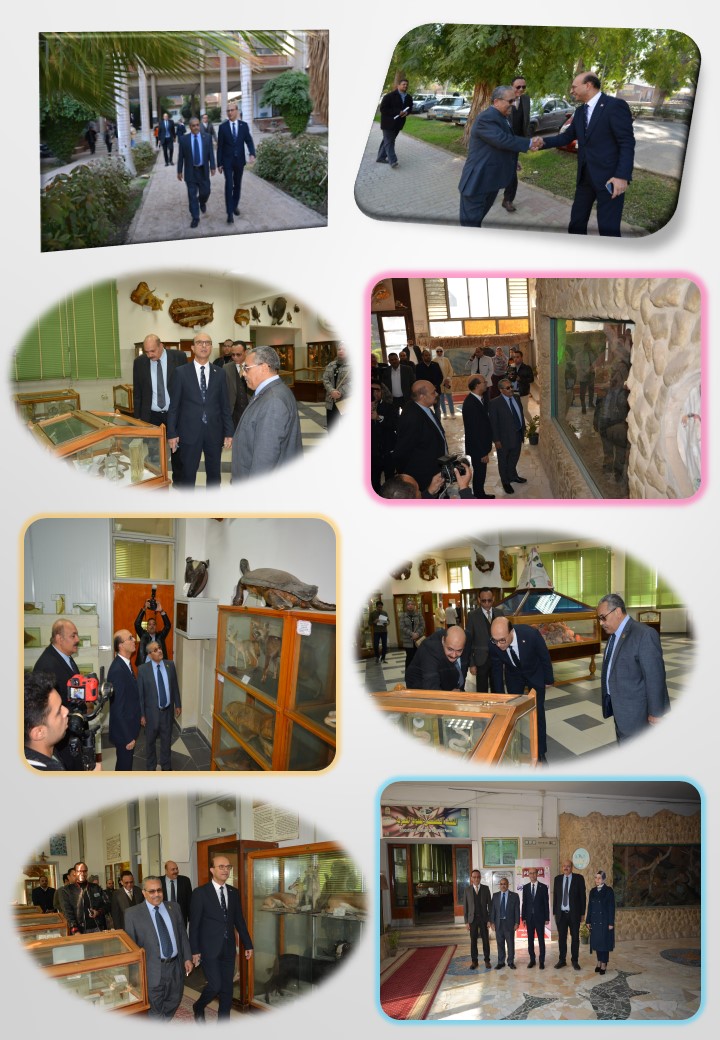
The visit of Mr. Ahmed El-Manshawi President of Assiut University of the Geological Museum of the Department of Geology of the Faculty of science

The visit of Mr. Ahmed El-Manshawi President of Assiut University of the Fona Museum in the Department of Zoology and Insects at the

New Step-up of Assiut University Rank in 2024 as has been ranked and announced by various International University Ranking Associations.



Simple excited state intramolecular proton transfer (ESIPT) based probe for pH and selective detection of copper(II) ion in aqueous alkaline environment: Sensitivity, selectivity and logic behavior
Research Abstract
A low molecular weight ESIPT-based probe was synthesized and tested for detecting pH, cations, and anions in aqueous solutions. The probe exhibited a good emission in water due to aggregation induced by π-π* stacking. It gave an “off–on” fluorescent response to higher pHs because of blocking the non-radiative ESIPT after deprotonating phenolic hydroxyl groups. Moreover, the fluorescence emission of the probe (water/ethanol = 3:1, pH 10) was quenched only by Cu2+ with limit of detection LOD = 3.2 μM. The stoichiometric ratio of the probe/Cu2+ complex was found to be 1:1. Furthermore, changes of the probe’s absorption and emission signals (as outputs) in response to the presence of H+ and HO– or Cu2+ and Br− stimuli (as chemical inputs) mimics INHIBIT, IMPLICATION and NOT TRANSFER logic gates.
Research Date
Research Department
Research Journal
Journal of Photochemistry & Photobiology, A: Chemistry
Research Member
Research Pages
115176
Research Publisher
Elseiver
Research Vol
446
Research Website
https://www.sciencedirect.com/science/article/pii/S101060302300641X?via%3Dihub
Research Year
2023
New Water-Soluble Poly(propylene imine) Dendrimer Modified with 4-Sulfo-1,8-naphthalimide Units: Sensing Properties and Logic Gates Mimicking
Research Abstract
A new water-soluble poly(propylene imine) dendrimer (PPI) modified with 4-sulfo-1,8-naphthalimid units (SNID) and its related structure monomer analog (SNIM) has been prepared by a simple synthesis. The aqueous solution of the monomer exhibited aggregation-induced emission (AIE) at 395 nm, while the dendrimer emitted at 470 nm due to an excimer formation beside the AIE at 395 nm. Fluorescence emission of the aqueous solution of either SNIM or SNID was significantly affected by traces of different miscible organic solvents, and the limits of detection were found to be less than 0.05% (v/v). Moreover, SNID exhibited the function to execute molecular size-based logic gates where it mimics XNOR and INHIBIT logic gates using water and ethanol as inputs and the AIE/excimer emissions as outputs. Hence, the concomitant execution of both XNOR and INHIBIT enables SNID to mimic digital comparators.
Research Date
Research Department
Research Journal
Sensors
Research Member
Research Pages
5268
Research Publisher
MPDI
Research Vol
23(11)
Research Website
https://www.mdpi.com/1424-8220/23/11/5268
Research Year
2023