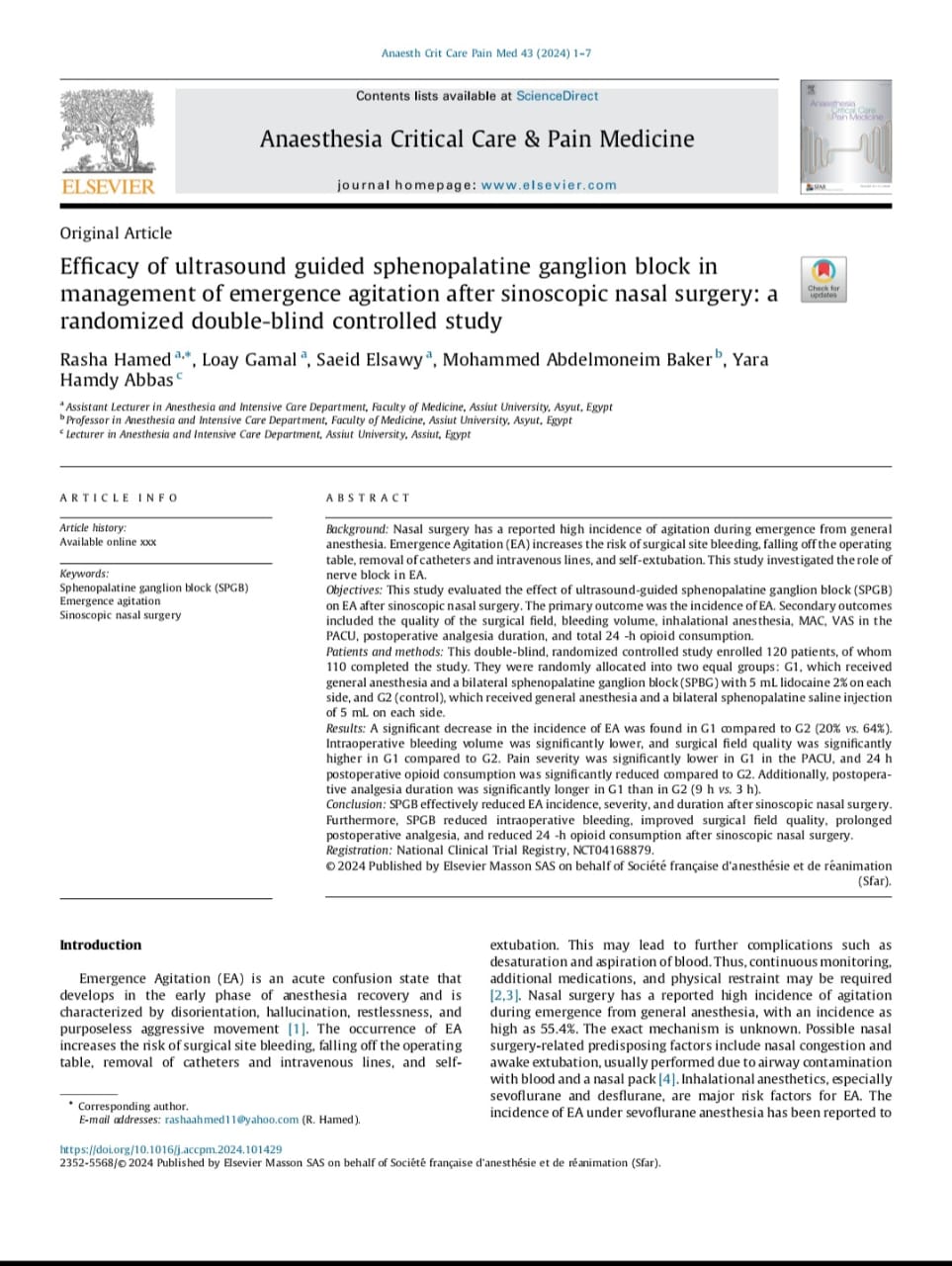
Efficacy of Ultrasound Guided Sphenopalatine Ganglion Block on Emergence Agitation After Sinoscopic Nasal Surgery Under Sevoflurane Anesthesia: A Randomized Controlled Double-Blind Study

Research Abstract

Background: Nasal surgery has a reported high incidence of agitation during emergence from general anesthesia. Emergence agitation (EA) increases the risk of surgical site bleeding, falling off the operating table, removal of catheters and intravenous lines, and self-extubation. This study investigated the role of nerve block in EA.

Aim and Objectives: This study evaluated the effect of ultrasound-guided sphenopalatine ganglion block (SPGB) on EA after sinoscopic nasal surgery. The primary outcome was the incidence of EA. Secondary outcomes included the quality of  the surgical field, bleeding volume, inhalational anesthesia MAC, VAS in the PACU, postoperative analgesia duration, and total 24-hour opioid consumption.

Patients and Methods: This double-blind, randomized controlled study enrolled 120 patients, of whom 110 completed the study. They were randomly allocated into two equal groups: GI (sphenopalatine), which received general anesthesia and a bilateral sphenopalatine ganglion block with 5 ml lidocaine 2% on each side, and G2 (control), which received general anesthesia and a bilateral sphenopalatine saline injection of 5 ml on each side.

Results: A significant decrease in the incidence of EA was found in the SPGB group compared to the control group (20% vs. 64%). Intraoperative bleeding volume was significantly lower, and surgical field quality was significantly higher in the SPGB group compared to the control group. Pain severity was significantly lower in the SPGB group in the PACU, and 24h postoperative opioid consumption was significantly reduced compared to the control group. Additionally, postoperative analgesia duration was significantly longer in the SPGB group compared to the control group (9 h vs. 3 h).

Conclusion: SPGB effectively reduced the incidence, severity, and duration of EA after sinoscopic nasal surgery. Furthermore, SPGB reduced intraoperative bleeding,  improved surgical field quality, prolonged postoperative analgesia, and reduced 24- hour opioid consumption after sinoscopic nasal surgery.
Research Authors
Rasha Hamed, M.D., Loay Gamal , Saeid Elsawy, Mohammed Abdelmoneim Baker, Yara Hamdy Abbas
Research Date
Research Image
Efficacy of Ultrasound Guided Sphenopalatine Ganglion Block on Emergence Agitation After Sinoscopic Nasal Surgery Under Sevoflurane Anesthesia: A Randomized Controlled Double-Blind Study
Research Journal
Anaesthesia Critical Care & Pain Medicine
Research Member
Research Pages
1-7
Research Publisher
ELSEVIER FRANCE-EDITIONS SCIENTIFIQUES MEDICALES ELSEVIER
Research Rank
Q1
Research Vol
43
Research Website
https://doi.org/10.1016/j.accpm.2024.101429
Research Year
2024

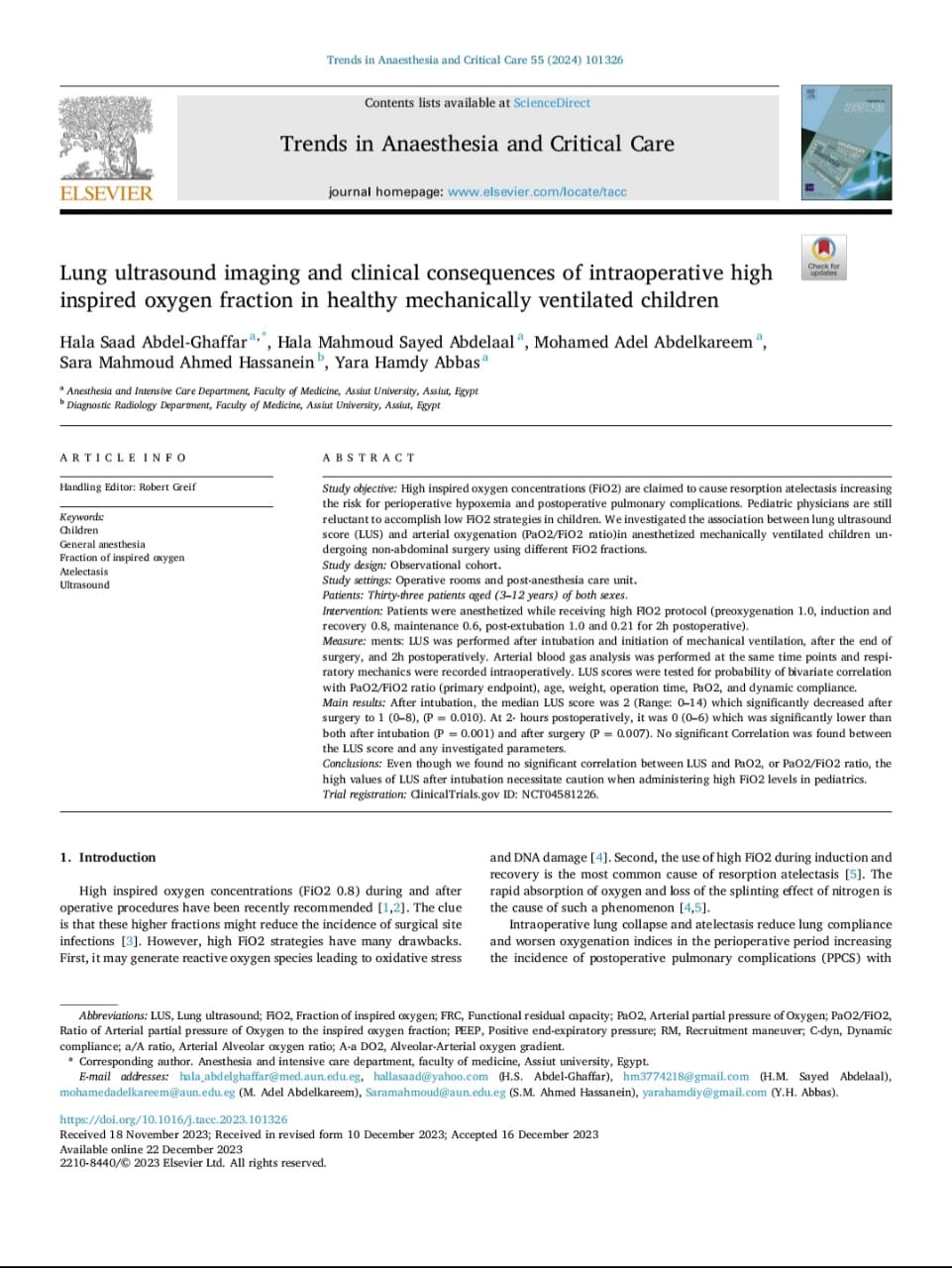
Lung ultrasound imaging and clinical consequences of intraoperative high inspired oxygen fraction in healthy mechanically ventilated children

Research Abstract

Study objective: High inspired oxygen concentrations (FiO2) are claimed to cause resorption atelectasis increasing the risk for perioperative hypoxemia and postoperative pulmonary complications. Pediatric physicians are still reluctant to accomplish low FiO2 strategies in children. We investigated the association between lung ultrasound score (LUS) and arterial oxygenation (PaO2/FiO2 ratio)in anesthetized mechanically ventilated children undergoing non-abdominal surgery using different FiO2 fractions.

Study design: Observational cohort.

Study settings: Operative rooms and post-anesthesia care unit.

Patients: Thirty-three patients aged (3–12 years) of both sexes.

Intervention: Patients were anesthetized while receiving high FIO2 protocol (preoxygenation 1.0, induction and recovery 0.8, maintenance 0.6, post-extubation 1.0 and 0.21 for 2h postoperative).

Measure: ments: LUS was performed after intubation and initiation of mechanical ventilation, after the end of surgery, and 2h postoperatively. Arterial blood gas analysis was performed at the same time points and respiratory mechanics were recorded intraoperatively. LUS scores were tested for probability of bivariate correlation with PaO2/FiO2 ratio (primary endpoint), age, weight, operation time, PaO2, and dynamic compliance.

Main results: After intubation, the median LUS score was 2 (Range: 014) which significantly decreased after surgery to 1 (08), (P = 0.010). At 2- hours postoperatively, it was 0 (06) which was significantly lower than both after intubation (P = 0.001) and after surgery (P = 0.007). No significant Correlation was found between the LUS score and any investigated parameters. Conclusions: Even though we found no significant correlation between LUS and PaO2, or PaO2/FiO2 ratio, the high values of LUS after intubation necessitate caution when administering high FiO2 levels in pediatrics.

Research Authors
Hala Saad Abdel-Ghaffar a, *, Hala Mahmoud Sayed Abdelaal a, Mohamed Adel Abdelkareem a, Sara Mahmoud Ahmed Hassanein b, Yara Hamdy Abbas a
Research Date
Research File
Research Image
Lung ultrasound imaging and clinical consequences of intraoperative high inspired oxygen fraction in healthy mechanically ventilated children
Research Journal
Trends in Anaesthesia and Critical Care
Research Member
Research Pages
101326
Research Publisher
ELSEVIER SCI LTD
Research Rank
Q3
Research Vol
55
Research Website
https://doi.org/10.1016/j.tacc.2023.101326
Research Year
2023

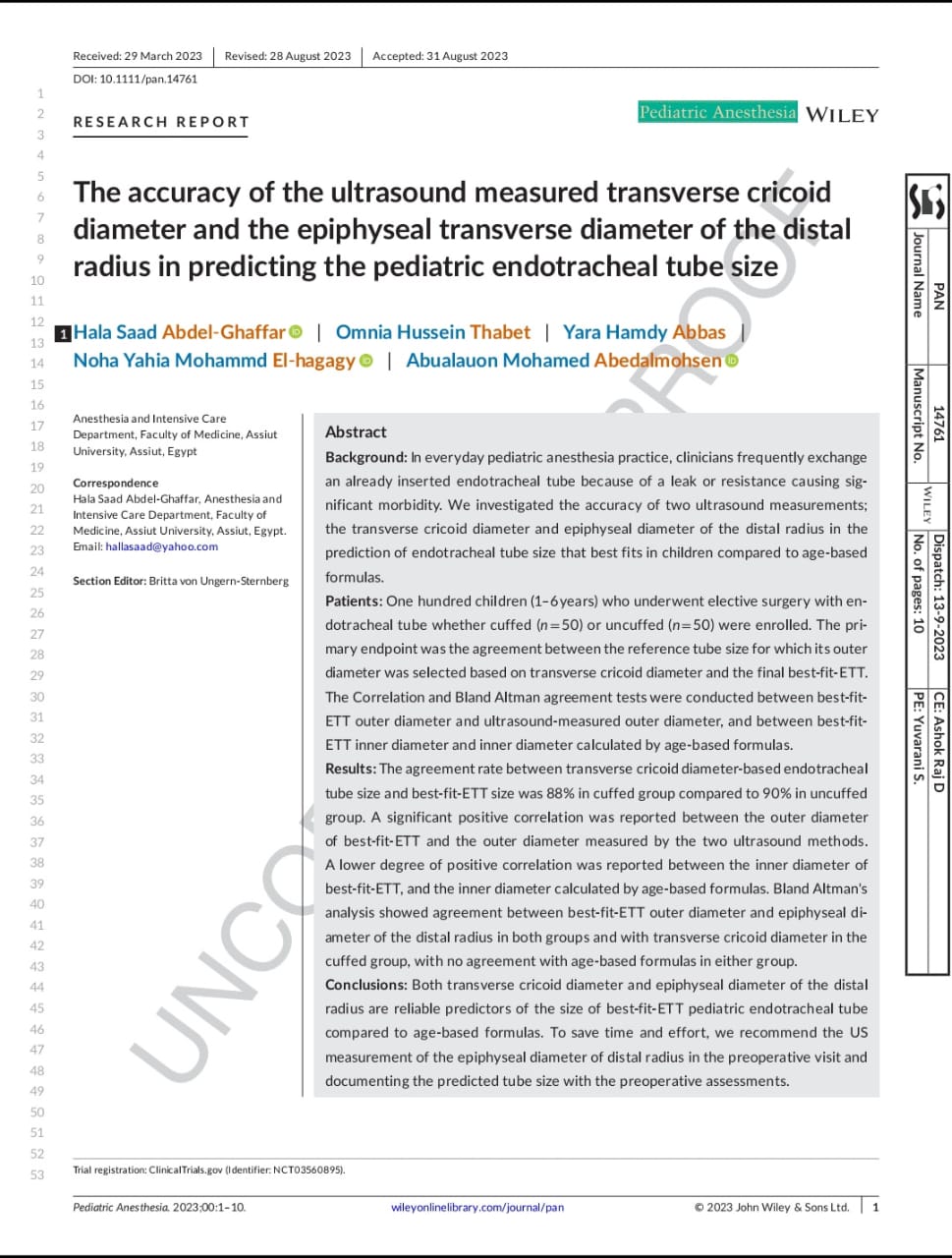
The Accuracy of The Ultrasound Measured Transverse Cricoid Diameter and The Epiphyseal Transverse Diameter of the Distal Radius in Predicting the Pediatric Endotracheal Tube Size

Research Abstract

Background:

In everyday pediatric anesthesia practice, clinicians frequently exchange an already inserted endotracheal tube because of a leak or resistance causing significant morbidity. We investigated the accuracy of two ultrasound measurements; the transverse cricoid diameter and epiphyseal diameter of the distal radius in the prediction of endotracheal tube size that best fits in children compared to age-based formulas.

Patients: One hundred children (1–6 years) who underwent elective surgery with endotracheal tube whether cuffed (n=50) or uncuffed (n=50) were enrolled. The primary endpoint was the agreement between the reference tube size for which its outer diameter selected based on transverse cricoid diameter and the final Best-Fit-ETT. The Correlation and Bland Altman agreement tests were conducted between Best-Fit-ETT outer diameter and ultrasound measured outer diameter, and between Best-Fit-ETT inner diameter and inner diameter calculated by agebased formulas.

Results: The agreement rate between transverse cricoid diameter based endotracheal tube size and Best-Fit-ETT size was 88% in cuffed group compared to 90% in uncuffed group. A significant positive correlation was reported between the outer diameter of Best-Fit-ETT, and the outer diameter measured by the two ultrasound methods. A lower degree of positive correlation was reported between the inner diameter of Best-Fit-ETT, and the inner diameter calculated by age-based formulas. Bland Altman's analysis showed agreement between Best-Fit-ETT outer diameter and epiphyseal diameter of the distal radius in both groups and with transverse cricoid diameter in the cuffed group, with no agreement with age-based formulas in either group.

Conclusions: Both transverse cricoid diameter and epiphyseal diameter of the distal radius are reliable predictors of the size of Best-Fit-ETT pediatric endotracheal tube compared to age-based formulas. To save time and effort, we recommend the US measurement of the epiphyseal diameter of distal radius in the preoperative visit and documenting the predicted tube size with the preoperative assessments.

Background:

In everyday pediatric anesthesia practice, clinicians frequently exchange an already inserted endotracheal tube because of a leak or resistance causing significant morbidity. We investigated the accuracy of two ultrasound measurements; the transverse cricoid diameter and epiphyseal diameter of the distal radius in the prediction of endotracheal tube size that best fits in children compared to age-based formulas.

Patients: One hundred children (1–6 years) who underwent elective surgery with endotracheal tube whether cuffed (n=50) or uncuffed (n=50) were enrolled. The primary endpoint was the agreement between the reference tube size for which its outer diameter selected based on transverse cricoid diameter and the final Best-Fit-ETT. The Correlation and Bland Altman agreement tests were conducted between Best-Fit-ETT outer diameter and ultrasound measured outer diameter, and between Best-Fit-ETT inner diameter and inner diameter calculated by agebased formulas.

Results: The agreement rate between transverse cricoid diameter based endotracheal tube size and Best-Fit-ETT size was 88% in cuffed group compared to 90% in uncuffed group. A significant positive correlation was reported between the outer diameter of Best-Fit-ETT, and the outer diameter measured by the two ultrasound methods. A lower degree of positive correlation was reported between the inner diameter of Best-Fit-ETT, and the inner diameter calculated by age-based formulas. Bland Altman's analysis showed agreement between Best-Fit-ETT outer diameter and epiphyseal diameter of the distal radius in both groups and with transverse cricoid diameter in the cuffed group, with no agreement with age-based formulas in either group.

Conclusions: Both transverse cricoid diameter and epiphyseal diameter of the distal radius are reliable predictors of the size of Best-Fit-ETT pediatric endotracheal tube compared to age-based formulas. To save time and effort, we recommend the US measurement of the epiphyseal diameter of distal radius in the preoperative visit and documenting the predicted tube size with the preoperative assessments.

Research Authors
Abdel-Ghaffar HS, Thabet OH, Abbas YH, El-hagagy NYM, Abedalmohsen AM
Research Date
Research Image
The Accuracy of The Ultrasound Measured Transverse Cricoid Diameter and The Epiphyseal Transverse Diameter of the Distal Radius in Predicting the Pediatric Endotracheal Tube Size
Research Journal
Pediatric Anesthesia
Research Member
Research Pages
68-78
Research Publisher
John Wiley & Sons
Research Rank
Q2
Research Vol
34
Research Website
https://doi.org/10.1111/pan.14761
Research Year
2023

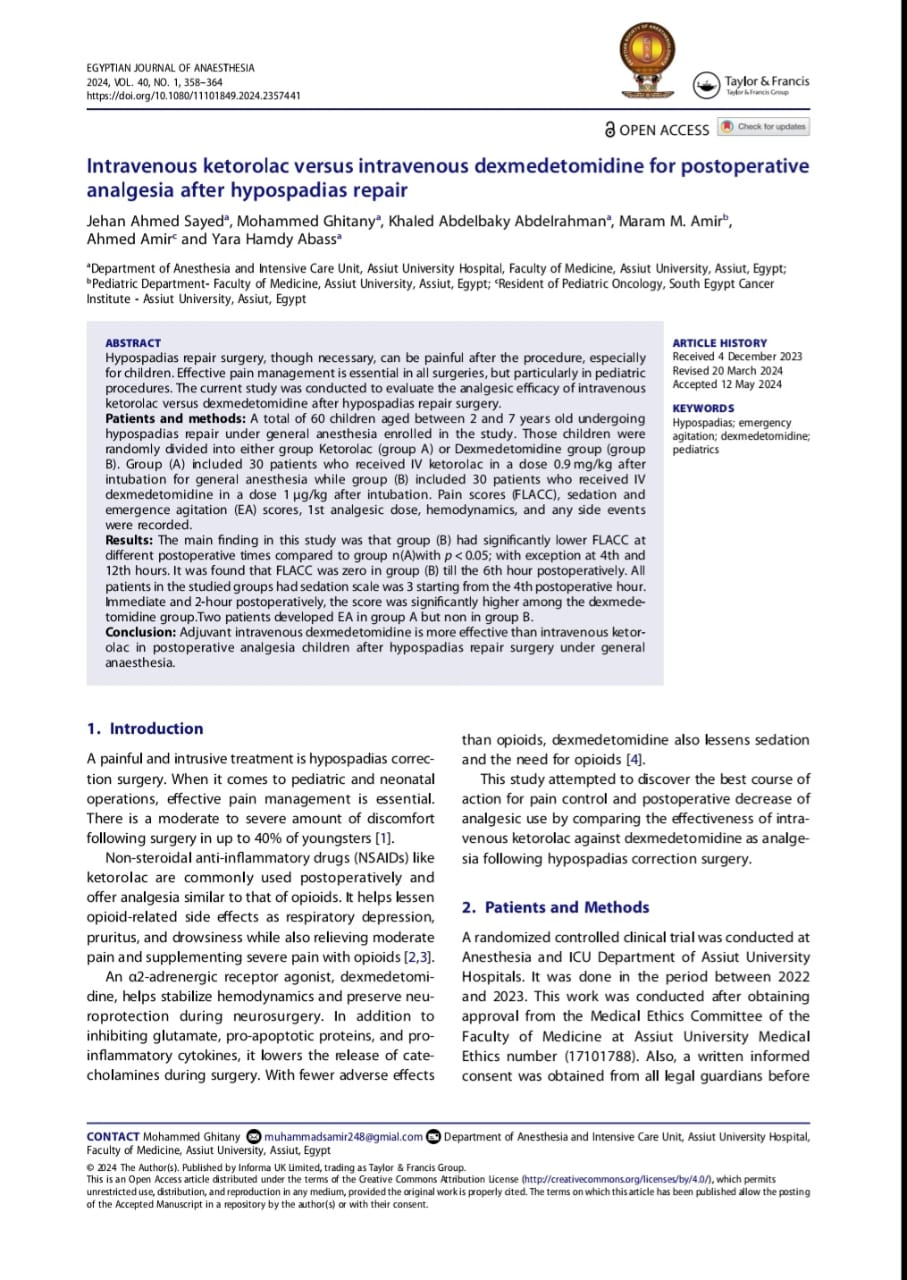
Intravenous ketorolac versus intravenous dexmedetomidine for postoperative analgesia after hypospadias repair

Research Abstract

ABSTRACT

Hypospadias repair surgery, though necessary, can be painful after the procedure, especially for children. Effective pain management is essential in all surgeries, but particularly in pediatric procedures. The current study was conducted to evaluate the analgesic efficacy of intravenous ketorolac versus dexmedetomidine after hypospadias repair surgery.

Patients and methods:

A total of 60 children aged between 2 and 7 years old undergoing hypospadias repair under general anesthesia enrolled in the study. Those children were randomly divided into either group Ketorolac (group A) or Dexmedetomidine group (group B). Group (A) included 30 patients who received IV ketorolac in a dose 0.9 mg/kg after intubation for general anesthesia while group (B) included 30 patients who received IV dexmedetomidine in a dose 1 μg/kg after intubation. Pain scores (FLACC), sedation and emergence agitation (EA) scores, 1st analgesic dose, hemodynamics, and any side events were recorded.

Results:

The main finding in this study was that group (B) had significantly lower FLACC at different postoperative times compared to group n(A)with p < 0.05; with exception at 4th and 12th hours. It was found that FLACC was zero in group (B) till the 6th hour postoperatively. All patients in the studied groups had sedation scale was 3 starting from the 4th postoperative hour. Immediate and 2-hour postoperatively, the score was significantly higher among the dexmedetomidine group.Two patients developed EA in group A but non in group B.

Conclusion:

Adjuvant intravenous dexmedetomidine is more effective than intravenous ketorolac in postoperative analgesia children after hypospadias repair surgery under general anaesthesia.

Research Authors
Jehan Ahmed Sayeda, Mohammed Ghitanya, Khaled Abdelbaky Abdelrahmana, Maram M. Amirb, Ahmed Amirc and Yara Hamdy Abassa
Research Date
Research Image
Intravenous ketorolac versus intravenous dexmedetomidine for postoperative analgesia after hypospadias repair
Research Journal
Egyptian Journal of Anaesthesia
Research Member
Research Pages
358-364
Research Publisher
Taylor & Francis
Research Rank
Q3
Research Vol
40
Research Website
https://doi.org/10.1080/11101849.2024.2357441
Research Year
2024

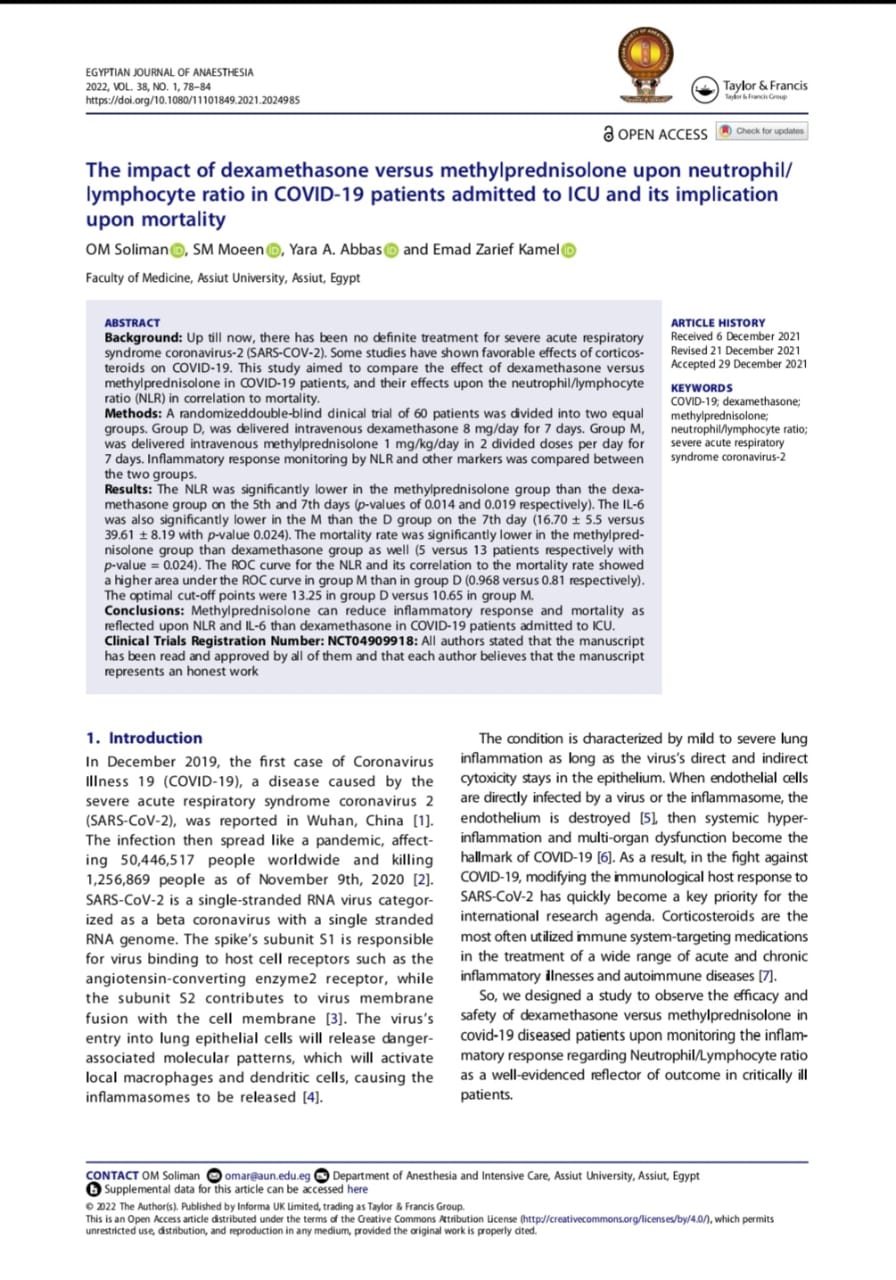
The impact of dexamethasone versus methylprednisolone upon neutrophil/lymphocyte ratio in COVID-19 patients admitted to ICU and its implication upon mortality

Research Abstract

Background: Up till now, there has been no definite treatment for severe acute respiratory syndrome coronavirus-2 (SARS-COV-2). Some studies have shown favorable effects of corticosteroids on COVID-19. This study aimed to compare the effect of dexamethasone versus methylprednisolone in COVID-19 patients, and their effects upon the neutrophil/lymphocyte ratio (NLR) in correlation to mortality.

Methods: A randomized double-blind clinical trial of 60 patients was divided into two equal groups. Group D, was delivered intravenous dexamethasone 8 mg/day for 7 days. Group M, was delivered intravenous methylprednisolone 1 mg/kg/day in 2 divided doses per day for 7 days. Inflammatory response monitoring by NLR and other markers was compared between the two groups.

Results: The NLR was significantly lower in the methylprednisolone group than the dexamethasone group on the 5th and 7th days (p-values of 0.014 and 0.019 respectively). The IL-6 was also significantly lower in the M than the D group on the 7th day (16.70 ± 5.5 versus 39.61 ± 8.19 with p-value 0.024). The mortality rate was significantly lower in the methylprednisolone group than dexamethasone group as well (5 versus 13 patients respectively with p-value = 0.024). The ROC curve for the NLR and its correlation to the mortality rate showed a higher area under the ROC curve in group M than in group D (0.968 versus 0.81 respectively). The optimal cut-off points were 13.25 in group D versus 10.65 in group M.

Conclusions: Methylprednisolone can reduce inflammatory response and mortality as reflected upon NLR and IL-6 than dexamethasone in COVID-19 patients admitted to ICU. Clinical Trials Registration Number: NCT04909918: All authors stated that the manuscript has been read and approved by all of them and that each author believes that the manuscript represents an honest work

Research Authors
OM Soliman , SM Moeen , Yara A. Abbas and Emad Zarief Kamel
Research Date
Research Image
The impact of dexamethasone versus methylprednisolone upon neutrophil/lymphocyte ratio in COVID-19 patients admitted to ICU and its implication upon mortality
Research Journal
Egyptian Journal Of Anaesthesia
Research Member
Research Pages
78-84
Research Publisher
Taylor & Francis
Research Rank
indexed_ESCI
Research Vol
38
Research Website
DOI: 10.1080/11101849.2021.2024985
Research Year
2022

Characteristics and Outcomes of Heart Failure–Related Intensive Care Unit Admissions in Adults with Cardiomyopathy

Research Authors
noor m.El -El Hefny. Ahmed Aly obiedallah. Mohammed Ahmed abdelhmied
Research Date
Research Department
Research Journal
JCRMB
Research Year
2025

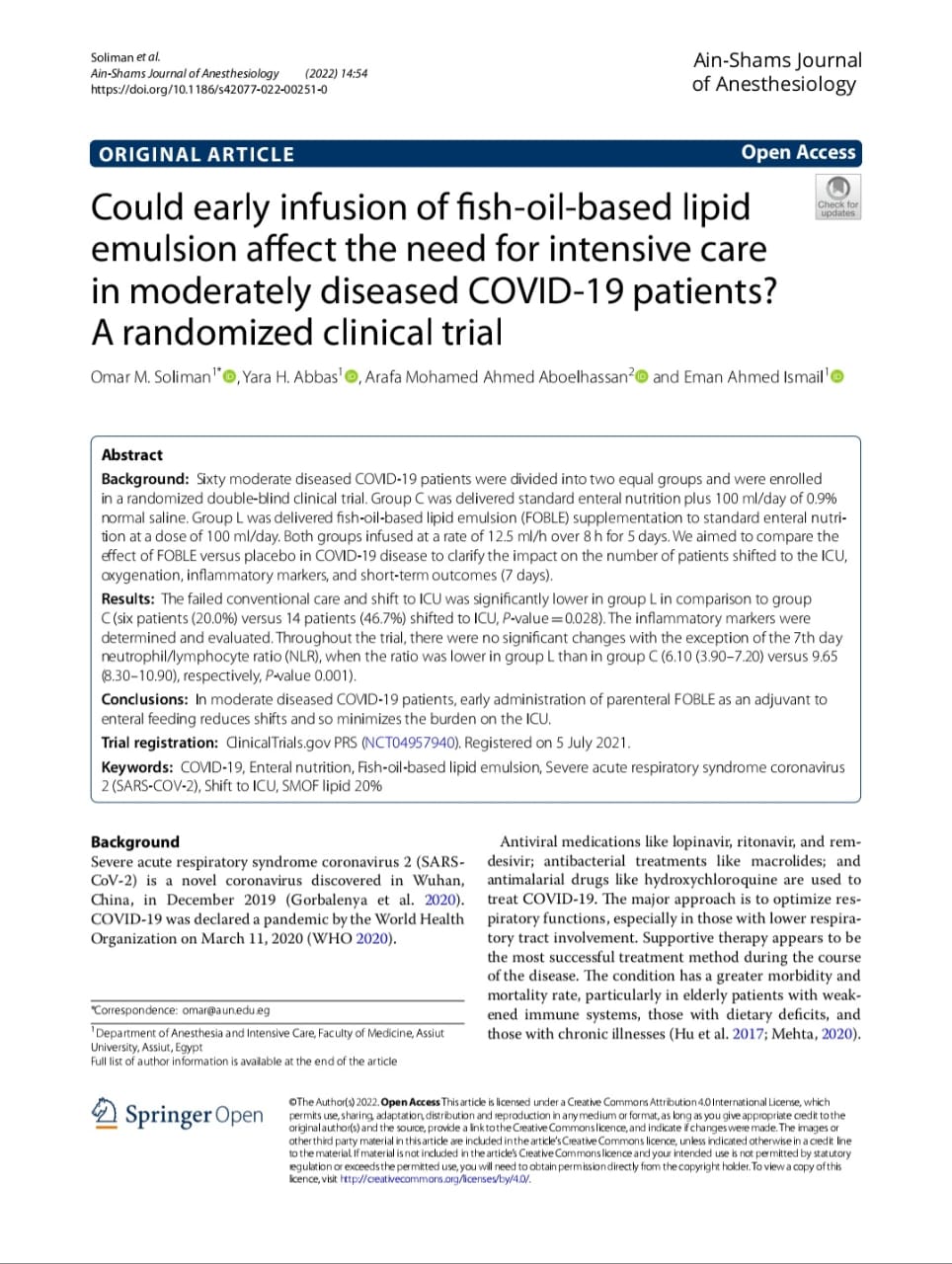
Could early infusion of fish‑oil‑based lipid emulsion affect the need for intensive care in moderately diseased COVID‑19 patients? A randomized clinical trial

Research Abstract

Background: Sixty moderate diseased COVID-19 patients were divided into two equal groups and were enrolled in a randomized double-blind clinical trial. Group C was delivered standard enteral nutrition plus 100 ml/day of 0.9% normal saline. Group L was delivered fish-oil-based lipid emulsion (FOBLE) supplementation to standard enteral nutrition at a dose of 100 ml/day. Both groups infused at a rate of 12.5 ml/h over 8 h for 5 days. We aimed to compare the effect of FOBLE versus placebo in COVID-19 disease to clarify the impact on the number of patients shifted to the ICU, oxygenation, inflammatory markers, and short-term outcomes (7 days).

Results: The failed conventional care and shift to ICU was significantly lower in group L in comparison to group C (six patients (20.0%) versus 14 patients (46.7%) shifted to ICU, P-value = 0.028). The inflammatory markers were determined and evaluated. Throughout the trial, there were no significant changes with the exception of the 7th day neutrophil/lymphocyte ratio (NLR), when the ratio was lower in group L than in group C (6.10 (3.90–7.20) versus 9.65 (8.30–10.90), respectively, P-value 0.001).

Conclusions: In moderate diseased COVID-19 patients, early administration of parenteral FOBLE as an adjuvant to enteral feeding reduces shifts and so minimizes the burden on the ICU.

Research Authors
Omar M. Soliman1* , Yara H. Abbas1 , Arafa Mohamed Aboelhassan2 and Eman Ahmed Ismail1
Research Date
Research File
Research Image
Could early infusion of fish‑oil‑based lipid emulsion affect the need for intensive care in moderately diseased COVID‑19 patients? A randomized clinical trial
Research Journal
Ain-Shams Journal of Anesthesiology
Research Member
Research Pages
54-62
Research Publisher
SpringerLink
Research Rank
0
Research Vol
14
Research Website
https://doi.org/10.1186/s42077-022-00251-0
Research Year
2022

Age-related lung changes linked to altered lysosomal protease profile, histology, and ultrastructure

Research Abstract

Introduction

The aging process is intricately linked to alterations in cellular and tissue structures, with the respiratory system being particularly susceptible to age-related changes. Therefore, this study aimed to profile the activity of proteases using activity-based probes in lung tissues of old and young rats, focusing on the expression levels of different, in particular cathepsins G and X and matrix Metalloproteinases (MMPs). Additionally, the impact on extracellular matrix (ECM) components, particularly fibronectin, in relation to age-related histological and ultrastructural changes in lung tissues was investigated.

Materials and methods

Lung tissues from old and young rats were subjected to activity-based probe profiling to assess the activity of different proteases. Expression levels of cathepsins G and X were quantified, and zymography was performed to evaluate matrix metalloproteinases activity. Furthermore, ECM components, specifically fibronectin, were examined for signs of degradation in the old lung tissues compared to the young ones. Moreover, histological, immunohistochemical and ultrastructural assessments of old and young lung tissue were also conducted.

Results

Our results showed that the expression levels of cathepsins G and X were notably higher in old rat lung tissues in contrast to those in young rat lung tissues. Zymography analysis revealed elevated MMP activity in the old lung tissues compared to the young ones. Particularly, significant degradation of fibronectin, an essential ECM component, was observed in the old lung tissues. Numerous histological and ultrastructural alterations were observed in old lung tissues …

Research Authors
Mohammed Aufy, Mahmoud Abd-Elkareem, Medina Mustafic, Mostafa A Abdel-Maksoud, Ali Hakamy, Veronika Baresova, Akram A Alfuraydi, Mahmoud Ashry, Jana Lubec, Ayman S Amer, Christian R Studenik, Ahmed M Hussein, Mohamed H Kotob
Research Date
Research Department
Research Journal
PloS one
Research Pages
e0311760
Research Publisher
Public Library of Science
Research Vol
19
Research Website
https://scholar.google.com.eg/scholar?oi=bibs&cluster=10111467945595416398&btnI=1&hl=ar
Research Year
2024

Idiopathic ketotic hypoglycemia in children: an update

Research Abstract

Idiopathic ketotic hypoglycemia (IKH) is defined as bouts of hypoglycemia with increased blood or urine ketones in certain children after prolonged fasting or during illness. IKH is divided into physiological IKH, which is most frequently observed in normal children with intercurrent acute illness, and pathological IKH, which occurs in children who lack counter-regulatory hormones, have a metabolic disease, or have Silver-Russell syndrome. The typical patient is a young child between the ages of 10 months and 6 years. Episodes nearly always occur in the morning after overnight fasting. Symptoms include those of neuroglycopenia, ketosis, or both. IKH may be diagnosed after ruling out various metabolic and hormonal conditions associated with ketotic hypoglycemia. Sufficient amounts of carbohydrates and protein, avoidance of prolonged fasting, and increased frequency of food ingestion are the main modes of treating IKH. It is crucial to understand the pathogenesis of IKH and to distinguish physiological IKH from pathological IKH. In this mini-review, we present a brief summary of IKH in terms of its definition, types, clinical presentation, diagnosis, and therapeutic approach in children.

Research Authors
Kotb Abbass Metwalley, Hekma Saad Farghaly
Research Date
Research Department
Research Journal
Annals of Pediatric Endocrinology & Metabolism
Research Year
2024

Gynecomastia in adolescent males: current understanding of its etiology, pathophysiology, diagnosis, and treatment

Research Abstract

Gynecomastia (GM) is a common and continuously evolving condition that commonly occurs during adolescence. It is the source of significant embarrassment and psychological stress in adolescent males. GM is characterized by enlargement of the male breast due to the proliferation of glandular ducts and stromal components. The main cause of GM during adolescence is physiological or pubertal GM, which is primarily attributed to an imbalance between estrogen and androgen activity. Physiological GM is typically transient and resolves within several months, although it may take several years to resolve. GM may also be caused by other pathological conditions and could be indicative of an endocrine disease. It is crucial to understand the pathogenesis of GM to distinguish it from normal developmental variants due to pathological causes. The aim of this review is to highlight the significance of GM during adolescence in terms of potential etiologies, clinical and laboratory diagnoses, and current management.

Research Authors
Kotb Abbass Metwalley, Hekma Saad Farghaly
Research Date
Research Department
Research Journal
Annals of Pediatric Endocrinology & Metabolism
Research Pages
75-81
Research Publisher
Korean Society of Pediatric Endocrinology
Research Year
2024
Subscribe to