Effectiveness of the Educational Program Regarding Eating Disorders among Girl Students at Preparatory Schools in Assiut City

Research Abstract

Abstract
Background: Eating disorders (EDs) are a major public health issue faced by female students. The aim of this study was to evaluate the effectiveness of the educational program regarding eating disorders among Preparatory School Girls. Methods: The study employed a quasi-experimental research design. The study focused on four randomly selected secondary girls' schools in Assiut City, selected through a simple random sampling method. Multi stage random sample was used in this study. The sample size was 376 students. Data was collected using a self-administered structured questionnaire which included demographic characteristics of students, Body Mass Index, assess the students' knowledge regarding eating disorders, The Eating Disorder Examination Questionnaire. Results: the study comprises younger adolescents aged 11-13 years (61.4%), with a significant majority residing in urban areas (97.1%), 16.3 % of them had eating disorders, 76.1% of participants following a non-vegetarian diet and 23.9% adhering to vegetarianism. the examined girls initially possessed inadequate knowledge (93.3%), following the program, three-quarters of them (75.0%) transited to a state of good knowledge. No significant differences were found between demographic characteristic in both pre and post-test knowledge scores. Conclusion: The findings indicate an improvement in knowledge scores and a positive effect on reducing concerns and behaviors associated with eating disorders. Recommendation: Further studies on larger sample size among different groups and settings are needed for generalization of the study.
Keywords: Adolescent Girls, Eating Disorders & Educational Program

Research Authors
Shaimaa M. Goda1, Naglaa Mohammed Amein Ghanem2 & Safaa R. Osman3
Research Department
Research Journal
Assiut Scientific Nursing Journal
Research Member
Research Pages
150:162
Research Publisher
Faculty Of nursig
Research Vol
Vol, (12) No, (43 ),
Research Year
March, 2024

Effectiveness of a Nursing Education Program on Pregnant Women’s Knowledge and Practices of Breast Milk Expression and Infant Cup Feeding

Research Abstract

Background: Promoting breast milk expression and cup feeding supports maternal and child health by reducing dependence on formulas, thereby minimizing associated health risks and financial costs. Objective(s): This study aims to evaluate the effectiveness of a nursing education program on breast milk expression and infant cup feeding among pregnant women. Methods: A quasi-experimental pre/post-test design study was conducted in two maternal and child health centers with 422 pregnant women. The study utilized an interview questionnaire assessing personal data, knowledge of breast milk expression and storage, and an observational checklist for expression steps and cup feeding. The educational program was developed based on a comprehensive literature review and delivered through group sessions (12–14 participants per session) using videos, printed handouts, and structured practical demonstrations with researcher-designed breast and infant models and sterile storage bottles. Immediate post-intervention assessment was performed to evaluate improvement in participants’ knowledge and reported practices. Results: Nearly half (46.9%) of participants were aged 25-35 years. Before the intervention, only 29.4% of the pregnant women were aware that breast milk can be stored, 1.9% knew the correct duration for storage at room temperature, and 4.0% were able to correctly label and store expressed milk. Practical skills were also lacking, with just 4.2% using the correct expression technique, 6.2% practicing proper hygiene, and only 4.5% tracking daily milk intake. Post-intervention, the total knowledge score significantly improved from 10.18 ± 5.14 to 19.11 ± 3.11 (p < 0.001). The mean score for breast milk expression steps increased from 3.35 ± 1.92 to 7.12 ± 1.42 (p < 0.001), while cup feeding practice scores rose from 3.92 ± 2.75 to 5.34 ± 1.08 (p < 0.001). Conclusion: The study highlights a significant improvement in the knowledge and practice of breast milk expression and cup feeding among pregnant women following the intervention. The total knowledge score, as well as the practice scores for expressing breast milk and cup feeding, showed a statistically significant increase post-test. Keywords: Breast milk expression, Cup feeding, Pregnant women

Research Authors
Safaa R. Osman ¥, Shaimaa M. Goda
Research Date
Research Department
Research Journal
Journal of High Institute of Public Health
Research Member
Research Pages
94-103.
Research Vol
55(2):
Research Year
2025

Health Education Program Regarding Urinary Tract Infection among Adolescent Girls

Research Abstract

Abstract:
Background: Urinary tract infection, which are thought to be the second most frequent illness affecting people from childhood to old age and are primarily found in females, are currently the biggest public health issue in terms of morbidity and financial cost. Aim: To evaluate the effect of the health education program regarding urinary tract infection prevalence, knowledge and self-reported practices among adolescent girls at Assiut City. Subjects and Method; Study design: Quasi-experimental pre/posttest research design. Setting: Four preparatory schools was selected. Sample: 354 adolescent girls. Tools: Eight components made up a structured interview questionnaire: Sociodemographic data, body mass index, medical history, self-reported symptoms, nutritional habits, health hygienic practices, prevalence of urinary tract infection, and knowledge of urinary tract infection pre and post the educational program. Results: It was found that 28% of adolescent girls are infected with urinary tract infection, 68% complained from flank pain as the most symptoms. There was an association between urinary tract infection and mother education, father occupation, body mass index, presence of chronic disease and social class. Also, 89.3% had poor knowledge pre the intervention with significant improvement after the application of the health education program, 63.8% had improper reported hygienic practices and 71% had unsatisfactory reported nutritional health habits. Conclusion: The health education program related to urinary tract infection was effective among the adolescent girls to improve their knowledge. Recommendations: Continuous health education programs for adolescent girls about prevention of urinary tract infection are very essential.
Keywords: Adolescent girls, Health education program & Urinary Tract Infection.

Research Authors
Shaimaa M. Goda1, Shimaa A. Khalaf2, Amal A. Elkhawaga3 & Fayza M. Mohammed4
Research Date
Research Department
Research Journal
Assiut Scientific Nursing Journal
Research Member
Research Pages
(22 - 36)
Research Vol
Vol, (13) No, (53),
Research Year
September, 2025,

Parental Awareness about Cryptosporidium, Related Health behaviors, Risks and Self -reported Morbidities in Swimming Pools at Assiut City

Research Abstract

Abstract
Background
Cryptosporidium is a protozoan parasite that causes diarrhea and affects
individuals of all ages. Parents of children who use swimming pools play a crucial
role in minimizing transmission by encouraging and modeling healthy practices
Aim: assess parental awareness about cryptosporidium, related health behaviors,
risks and self -reported morbidities in swimming pools at Assiut city. Methods:
Descriptive study was used in this study, non-probability purposive sampling
technique on 235 parents in 4 swimming pools. Data was collected using a selfadministered
structured questionnaire which included socio-demographic, parental
awareness about cryptosporidium, related health behaviors, risks, self-reported
symptoms and morbidities in swimming pools. Results: the study revealed that
62.6% of parents have unsatisfactory total knowledge level about cryptosporidium,
related health behaviors and risks while 37.4% of them get satisfactory level of
knowledge. Self -reported morbidities was 41.3 % of participants have mild
morbidity during swimming. Positive significant correlation between knowledge
about cryptosporidium and health risks among swimming pool users’ parents.
Conclusion: there was unsatisfactory knowledge about cryptosporidium, related
health behaviors and risks. Recommendation: Educational programs should be
implemented to improve knowledge of swimming pool attendance about
cryptosporidiosis and preventive measures.
Key Words: Cryptosporidium, Health behaviors, Parental awareness, Risks, Self -
reported morbidities, Swimming pools.

Research Authors
Shaimaa Gh. Ali 1, Asmaa A. Ibrahim2, Shaimaa M. Goda3
Research Date
Research Department
Research Journal
Tanta Scientific Nursing Journal
Research Member
Research Pages
210:228
Research Vol
Vol. 40. No. 1(Suppl 1),
Research Year
February 2026

Farmers' Low Back Pain, Associated Risk Factors, and Related Disability in Assiut District

Research Abstract

ABSTRACT
Background: One of the most prevalent health conditions in population is low back pain, although it is frequency and determinants are underestimated in the developing countries. The study aimed to: Assess the prevalence of farmers' low back pain, associated risk factors, and related disability in Assiut District. Research Design: Descriptive cross-sectional design. Sample: Included 221 farmers. Setting: Five villages were selected randomly. Study Tools: Four tools; Tool (I), part (1): Personal characteristics, part (2): Past medical history, and part (3): Body Mass Index, Tool II, part (1): Standardized Nordic questionnaires for the analysis of low back pain among farmers, part (2): Characteristics of last attack of low back pain, Tool III, part (1): Agricultural work-related conditions, part (2): Agricultural work-related biomechanical factors and Tools (IV): Oswestry Disability Index. Results: It was found that 54.8% of farmers aged 45–60 years, 78.7% male, and 25.8% had family history of low back pain. As well as LBP was highly prevalent (82.8%) with mostly gradual onset (62.8%). Also, months of agricultural work per year and the agricultural machinery were strongly associated with LBP. The strongest independent predictors were illiteracy, daily wage worker, and carrying heavy loads. Conclusion: Low back pain was highly prevalent among farmers which significantly associated with longer period of agricultural work and the use of agricultural machinery, with stronger independent predictors with illiteracy, daily wage, and carrying heavier load weight. Recommendations: A community-based education program should be put in place to raise farmers' knowledge about how to prevent and treat low back pain.
Key words: Disability, Farmers, Low Back Pain, Risk Factors.

Research Authors
Shaimaa M. Goda1, Shimaa Abdelrahim Khalaf2,
Research Date
Research Department
Research Journal
IEJNSR.
Research Member
Research Pages
82:103
Research Publisher
IEJNSR.
Research Vol
Vol. 7(1),
Research Year
2026

Prof. Dr. Fatima Rushdi Mohammed, Dean of the Faculty of Nursing at Assiut University, along with the Vice Deans, Heads of Academic Departments, and all administrative staff, extend their warmest heartful congratulations

and best wishes on the occasion of the academic promotion of:

  • Dr. Ghada Shalabypromoted to the rank of Professor of Critical Care and Emergency Nursing.

  • Dr. Amany Jamalpromoted to the rank of Assistant Professor of Pediatric Nursing.

  • Dr. Nahed Khamispromoted to the rank of Assistant Professor of Pediatric Nursing.

We sincerely wish them continued success and further scientific and professional advancement, praying that Allah blesses their efforts in serving the faculty and enhancing the educational and research process. #Nursing_Faculty_Media_Assiut_University


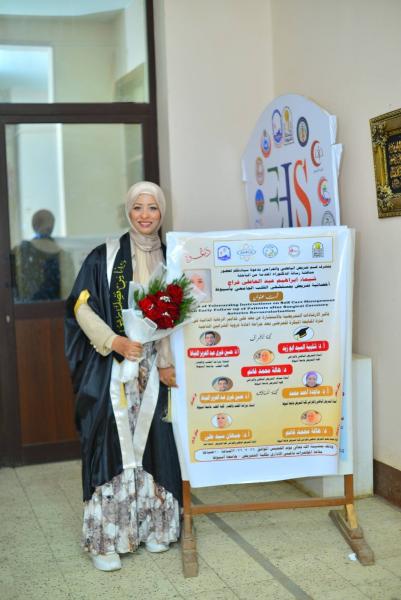
The Faculty of Nursing at Assiut University extends its sincere congratulations to the researcher, Shaimaa Ibrahim Abdel-Ati Farag, a Nursing Specialist at the University Heart Hospital in Assiut,

on the acceptance of her PhD thesis titled: "Effect of Telenursing Instructions on Self Care Management in Early Follow up of Patients after Surgical Coronary Arteries Revascularization"

Supervision and Examination Committee:

  • Prof. Dr. Hussein Khairy Abdel-Aziz Al-Khayyat: Professor of Cardiothoracic Surgery, Faculty of Medicine, Assiut University (Representing Supervisors).

  • Prof. Dr. Magda Ahmed Mohammed: Professor of Medical-Surgical Nursing, Faculty of Nursing, Assiut University (Internal Examiner).

  • Prof. Dr. Jihan Sayed Ali: Professor of Medical-Surgical Nursing, Faculty of Nursing, Minia University (External Examiner).

  • Dr. Hala Mohammed Ghanem: Assistant Professor at the Department of Medical-Surgical Nursing, Faculty of Nursing, Assiut University (Representing Supervisors).

We wish her continued success and prosperity in her scientific and research career. #Nursing_Faculty_Media_Assiut_University


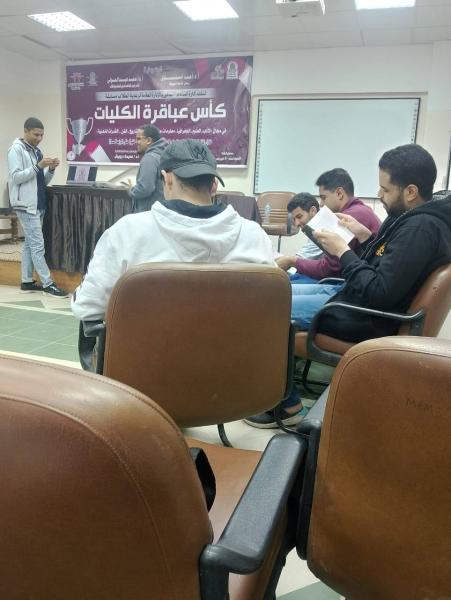
The "Geniuses Team" of the Faculty of Nursing at Assiut University wins first place for the second time at the university level. Prof. Dr. Fatima Rushdi Mohammed, Dean of the Faculty, Prof. Dr. Magda Ahmed Mohammed,

Vice Dean for Education, and Mr. Mahmoud Ahmed Abdel-Lahi, Director of Youth Welfare, extend their sincere congratulations to the Geniuses Team for their well-deserved victory in the "Geniuses Cup" for the academic year 2025/2026. The team achieved the highest overall score in the tournament with a total of 495 points. Furthermore, student Mahmoud Abdel-Qader Qotb earned the title of "Top Scorer" with a total of 370 points.

Winning Team Members:

  • Mahmoud Abdel-Qader Qotb (Internship year)

  • Mohamed Mokhtar Shehata (2nd year)

  • Mohamed Salah Ahmed (3rd year)

  • Mennat-Allah Mohamed Mahmoud (4th year)

  • Esraa Mohamed Sayed (2nd year)

  • Asmaa Khaled Abdel-Fattah (2nd year)

  • Supervisor: Ms. Roqaya Gamal Mostafa.

We wish our students continued excellence and further honorable achievements. #Nursing_Faculty_Media_Assiut_University


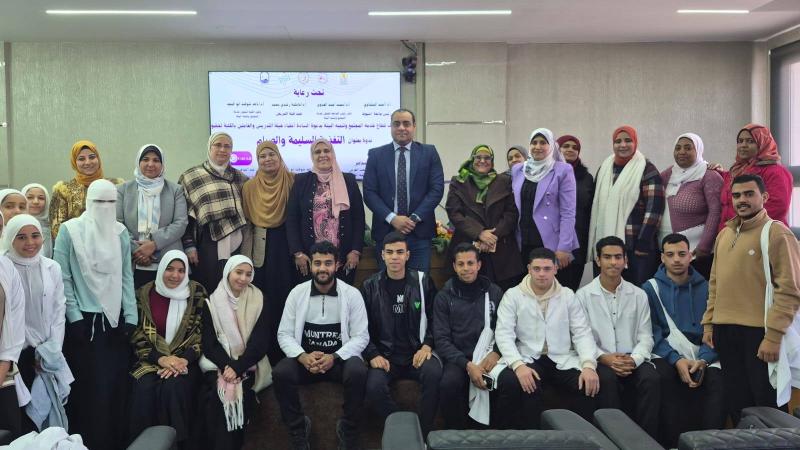
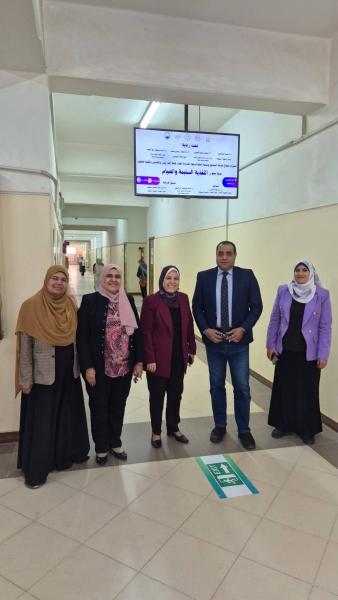
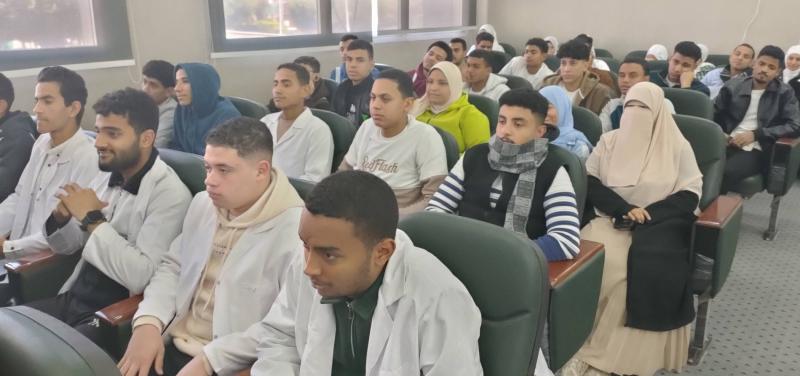
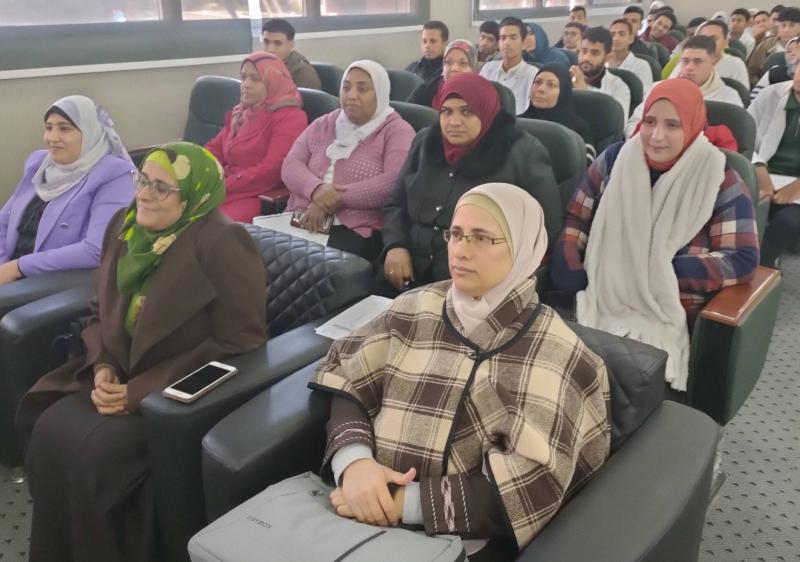
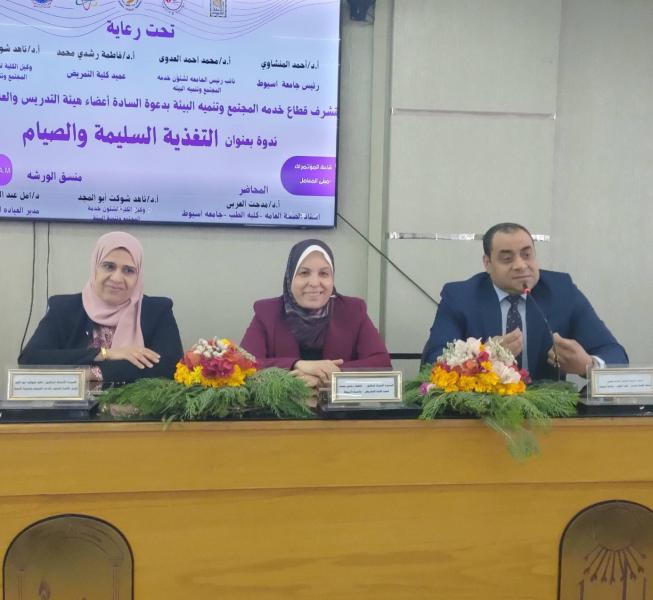
Assiut University’s Faculty of Nursing organizes an awareness seminar and panel discussion on "Proper Nutrition During Fasting" under the auspices of Prof. Dr. Ahmed El-Minshawy, President of Assiut University; Prof. Dr. Mohammed Ahmed El-Adawy,

 , Vice President for Community Service; Prof. Dr. Fatima Rushdi Mohammed, Dean of the Faculty; and Prof. Dr. Nahed Shawkat Abu El-Majd, Vice Dean.

The seminar, featuring Prof. Dr. Medhat El-Arabi and Dr. Amal Abdel-Shafi, covered essential health guidelines for fasting, such as starting Iftar with dates and water, focusing on complex carbohydrates and fiber during Suhoor, and ensuring adequate water intake. Key advice included:

  • Balanced Meals: Including protein (poultry, meat, fish) and healthy fats (olive oil, nuts).

  • Hydration: Drinking plenty of water between Iftar and Suhoor while avoiding sugary and caffeinated drinks.

  • Digestive Health: Eating fiber-rich foods like fruits and vegetables to improve digestion and maintain satiety.

  • Suhoor: Consuming slow-digesting carbs like oats or whole-grain bread with protein sources like yogurt.

The event concluded by emphasizing the importance of such awareness sessions in promoting a health culture among students and staff during the Holy Month of Ramadan.


Subscribe to