
The Effect of Aortic Regurgitation on Left Ventricular Flow Dynamics Assessed by 4D-Flow MRI

Research Abstract

Aortic regurgitation (AR) alters normal blood flow patterns in the left ventricle (LV), affecting diastolic filling dynamics, and is commonly quantified by the regurgitant fraction (RF). However, conventional diagnostic methods have notable limitations, prompting growing interest in four-dimensional flow magnetic resonance imaging (4D-flow MRI) as a tool for quantitatively assessing AR severity. In parallel, viscous energy dissipation (VED), which captures the energy loss caused by viscous forces within blood flow, provides additional important insight into the hemodynamic burden imposed on the LV by valvular dysfunction. This study aims to investigate the potential correlation between RF and VED in patients with AR, hypothesizing that higher RF values are associated with increased VED, thereby reflecting greater hemodynamic compromise. This pilot study included 10 patients with diagnosed AR and 9 healthy controls, all of whom underwent standardized cardiac MRI, including 4D-flow MRI. Volumetric blood flow and VED were assessed using validated post-processing techniques. Statistical analyses were conducted to evaluate group differences and explore the correlation between RF and VED. In healthy controls, LV flow exhibited a typical pattern during diastole and systole, forming a vortex during filling. Severe AR patients displayed disrupted LV flow, with regurgitant jets altering the flow dynamics. Quantitatively, integrated kinetic energy (iKE), vorticity (iVRT), and VED (iVED) were significantly elevated in AR patients compared to controls: iKE (0.003 ± 0.002 J vs. 0.001 ± 0.0004 J, p = 0.019), iVRT (0.304 ± 0.0738 s−1 vs 0.251 ± 0.0466 s−1, p = 0.077), and iVED (0.434 ± 0.307 mW vs. 0.166 ± 0.055 mW, p = 0.020). An increase was observed in patients with severe AR compared to controls, iKE rose to (0.005 J vs. 0.001 J), iVRT (0.335 s−1 vs. 0.233 s−1), and iVED (0.792 mW vs. 0.174 mW). All three parameters positively correlated with RF: iVRT (R2 = 0.175, p = 0.1263; Spearman R = 0.486), iVED (R2 = 0.628, p = 0.0038; Spearman R = 0.597), and iKE (R2 = 0.601, p = 0.0051; Spearman R = 0.616), indicating that increasing regurgitation severity is associated with greater intraventricular energy and flow disruption. This study quantifies the impact of AR on LV flow dynamics and demonstrates elevated VED in patients with AR. The observed correlation underscores the potential of VED as a complementary metric to RF in evaluating the hemodynamic impact of valvular regurgitation. Further studies with larger cohorts are needed to validate these findings and explore their clinical implications.
Research Authors
Wissam Abdallah;Ahmed Darwish;Julio Garcia;Lyes Kadem
Research Date
Research Journal
Annals of Biomedical Engineering
Research Member
Research Website
https://link.springer.com/article/10.1007/s10439-026-04187-6
Research Year
2026

The Department of Architecture announces the research seminars for the 2026–2027 academic year, to be held on Wednesday, September 2, at 12:00 PM.

The Department of Architecture announces the research seminars for the 2026–2027 academic year, to be held on Wednesday, September 2, at 12:00 PM.

Seminar No. (3) for the 2026–2027 Academic Year

Final Seminar for the Formation of the PhD Dissertation Examination Committee

Engineer Marwa Mohamed Ahmed Abdel-Hafez

Wednesday, September 2, 2026, at 12:00 PM

Location: Prof. Dr. Abdel-Moneim Hassan Kamel Lecture Hall, Department of Architecture

Medicine meets engineering... to shape your future in the specialization of tomorrow!

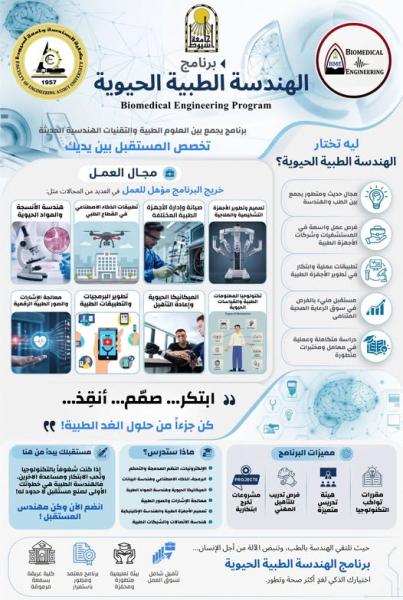
Where Medicine Meets Engineering... Shape Your Future in the Specialty of Tomorrow! 🩺🤖

The Faculty of Engineering at Assiut University announces the opening of registration for new students and those wishing to transfer from other engineering faculties to join the:

✨ Biomedical Engineering Program ✨

(Credit-Hour System)

Under the patronage of Prof. Dr. Ahmed Abdel-Mawla (University President) and Prof. Dr. Khaled Salah Saeed (Faculty Dean); and under the supervision of Prof. Dr. Mohamed Safwat Abou-Raya (Vice Dean for Education and Student Affairs) and Dr. Abdel-Rahman Morsi (Program Coordinator).

------------------------------

❓ Why Choose Biomedical Engineering?

Because it is the specialty of the future, combining medical sciences with modern engineering technologies—where engineering meets medicine, and machines come to life for the benefit of humanity.

💡 Your Future Starts Here:

If you are passionate about technology, love innovation, and want to help others... this program is designed specifically for you to become an engineer of the future!

⚡ Our Motto:

« Innovate... Design... Save... Be part of tomorrow's medical solutions! »

------------------------------

📚 What Will You Study in the Program?

* 🧩 Electronics, embedded systems, and control.

* 💻 Programming, artificial intelligence, and data engineering.

* 🧬 Biomechanics and medical materials engineering.

* 📊 Medical signal and image processing.

* ⚙️ Medical device design and clinical engineering.

* 🌐 Medical telecommunications and network engineering.

🔬 Program Highlights:

* 📖 Modern curriculum keeping pace with technological advancements.

* 👨‍🏫 Distinguished faculty with high competence and expertise.

* 🏣 Multiple field training opportunities. * 🎓 Innovative graduation projects.

* 💼 Comprehensive preparation for labor market requirements within a stimulating environment.

💼 Career opportunities post-graduation:

The program opens up broad career horizons in hospitals, research centers, and global medical device companies:

* Maintenance and management of various medical devices.

* Design and development of diagnostic and therapeutic devices.

* Artificial intelligence applications and medical software development.

* Tissue engineering and biomaterials.

* Information technology and biometrics.

* Biomechanics and rehabilitation.

* Calibration of signals and digital medical imaging.

------------------------------

📌 Admission requirements and procedures:

* Direct admission following nomination to the Faculty via the Central Coordination Office.

* Admission is available for students transferring from public engineering faculties (subject to Supreme Council of Universities regulations).

* Students enrolled in the traditional two-semester system may transfer to the credit-hour system.

📞 Contact and inquiries:

* 📧 Email: eng@aun.edu.eg

* ☎️ Phone: 0882333199

* 📱 WhatsApp: 01025528277

* 📍 Location: Faculty of Engineering - Assiut University - Biomedical Engineering Program (formerly the Printing Press Building).


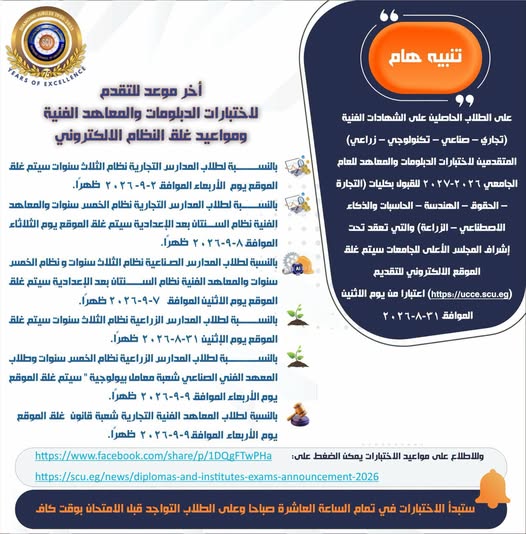
The Supreme Council of Universities announces the application deadlines for the 2026–2027 university admission exams for technical diplomas and technical institutes.

The Supreme Council of Universities announces the application deadlines for the 2026–2027 university admission exams for technical diplomas and technical institutes.

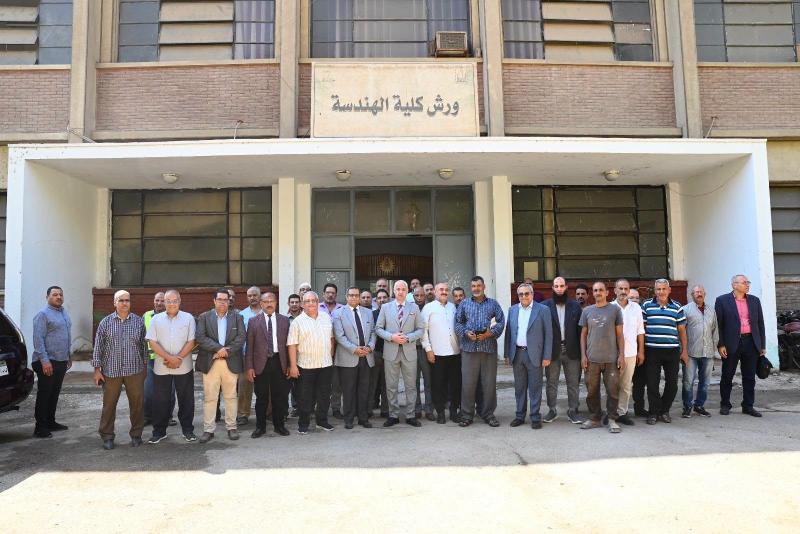
The President of Assiut University inspects the Faculty of Engineering’s workshops and directs the provision of necessary devices and equipment to enhance its production and educational capabilities.

Assiut University President Inspects Faculty of Engineering Workshops and Directs Provision of Equipment to Boost Production and Educational Capabilities

Source: Assiut University Media Office

Dr. Ahmed Abdel-Mawla, President of Assiut University, conducted a field tour on Tuesday, September 8, of the Faculty of Engineering workshops. This visit was part of his ongoing inspection tours to monitor workflow across various university sectors, assess needs for performance enhancement, and improve the quality of educational and production services—all in alignment with sustainable development goals and the rational use of resources.

The University President was accompanied on the tour by Dr. Khaled Salah, Dean of the Faculty of Engineering; Dr. Mohamed Safwat, Vice Dean for Education and Student Affairs; Dr. Mahmoud El-Sherif, Head of the Mechanical Engineering Department; and workshop supervisors Dr. Mahmoud Atef and Dr. Ahmed Abdel-Alim, alongside several faculty members, workshop staff, and technicians.

Dr. Abdel-Mawla began his tour by inspecting the exhibition of products from the Faculty of Engineering workshops, which showcases a diverse range of items manufactured and refurbished on-site. He commended the high quality and precision of the workmanship, as well as the technical and manufacturing capabilities of the workshops. These capabilities contribute to meeting some of the university's needs, reducing reliance on external procurement, and maximizing the utilization of available resources and assets. The University President also inspected the CNC laboratory, which is equipped with advanced machinery for manufacturing high-precision equipment, machine spare parts, wooden products, and gears. He emphasized the laboratory's importance in training students in digital manufacturing techniques, bridging the gap between academic theory and modern practical applications, and equipping them with technical skills that align with labor market demands.

The tour included visits to several of the Faculty’s workshops—such as those for turning, blacksmithing, metal casting, and carpentry—to observe the manufacturing, refurbishment, and repair processes carried out for equipment, tools, and spare parts serving various university sectors. Additionally, these workshops provide manufacturing services to the external community, thereby enhancing the university's role in community service and maximizing the utilization of its technical and manufacturing capabilities.

Dr. Ahmed Abdel-Mawla emphasized that the Faculty of Engineering’s workshops serve as a practical model for integrating education with production and leveraging the university's scientific and technical expertise. He highlighted the importance of their continued development and efficiency enhancement, as well as maximizing their production capabilities. This approach contributes to cost rationalization, meets the needs of university sectors, and provides students with a practical training environment that keeps pace with modern advancements in engineering and manufacturing.

The Assiut University President affirmed his full support for the Faculty of Engineering workshops, pledging to provide all necessary financial and logistical resources. This ensures that their actual needs for equipment and machinery are met, allowing them to sustain operations while enhancing production efficiency and output quality. During the tour, Dr. Ahmed Abdel-Mawla directed the provision of various pieces of equipment identified as necessary for the workshops. These include a wood press, a Chinese multi-purpose machine, a wood and agricultural waste shredder, motors for paper waste recycling equipment, and CNC wood routers. These additions aim to enhance workshop operations and meet the needs of the university's various sectors.

For his part, Dr. Khaled Salah expressed his sincere gratitude and appreciation to Dr. Ahmed Abdel-Mawla for his ongoing support of the Faculty of Engineering’s workshops and his commitment to providing the necessary machinery and equipment. He emphasized that this support serves as a significant driver for the continued development and increased efficiency of workshop operations.

The Dean of the Faculty of Engineering explained that the faculty's workshops are a key pillar supporting both educational and production activities. They provide a training environment that enables students to gain practical experience, while also playing a vital role in manufacturing and maintaining equipment and spare parts, meeting the needs of the faculty and its various departments, and supporting student projects through the fabrication of prototypes and mechanical components.قد تكون صورة ‏تحتوي على النص '‏الهندسة كلية ورش درشكليةالهندسة‏'‏

قد تكون صورة ‏شخص أو أكثر‏
 
قد تكون صورة ‏‏‏شخص أو أكثر‏، و‏بدلة‏‏ و‏زفاف‏‏
 
قد تكون صورة ‏شخص أو أكثر‏
 
قد تكون صورة ‏نص‏
قد تكون صورة ‏‏مخزن أخشاب‏ و‏نص‏‏
 
لا يتوفر وصف للصورة.
 
لا يتوفر وصف للصورة.

Fractal Analysis and Stepwise Erosion: Revealing the Evolution of Cavitation Damage in Stainless Steel Available to Purchase

Research Authors
O. O. Osman, A. Abouel-Kasem, S. M. Ahmed
Research Date
Research Journal
Journal of Tribology
Research Website
https://asmedigitalcollection.asme.org/tribology/article-abstract/148/11/111702/1234238/Fractal-Analysis-and-Stepwise-Erosion-Revealing?redirectedFrom=fulltext
Research Year
2026
Subscribe to