The neural crest across the lifespan: Implications for aging, degeneration, and regeneration

Research Abstract

The neural crest (NC) is a transient, multipotent cell population that contributes extensively to vertebrate embryogenesis, generating craniofacial structures, peripheral nerves, melanocytes, and cardiovascular elements. While
classically studied in the context of development, increasing evidence demonstrates that NC-derived cells persist into adulthood, where they support tissue
homeostasis, plasticity, and repair. This review synthesizes current insights
into the lifelong impact of the NC, with emphasis on aging, degeneration, and
regeneration. We first outline the developmental origins and lineage diversification of NC cells, highlighting mechanisms that establish long-lived progenitor pools. We then examine how age-related changes in NC-derived tissues,
including craniofacial bone remodeling, pigmentary alterations, autonomic
decline, and peripheral neuropathies, reflect broader principles of cellular
senescence and disrupted signaling. The involvement of NC derivatives in ageassociated pathologies, such as neurodegeneration, cardiac anomalies, and craniofacial degeneration, is also addressed. Finally, we highlight progress in
regenerative medicine that leverages NC-derived stem and progenitor cells,
together with molecular pathways that may rejuvenate their function in aging
tissues. By integrating developmental, pathological, and regenerative perspectives, this review positions the NC as a central contributor to organismal aging
and underscores its translational relevance. We also outline unresolved questions and future research directions at the interface of NC biology, aging, and
regenerative medicine. 
 

Research Authors
Martha Emil Adly
Research Date
Research Department
Research Journal
The Anatomical Record
Research Member
Research Year
2026

Comparative study between nalbuphine and dexmedetomidine for conscious sedation in patients undergoing colonoscopy: randomized comparative trial

Research Abstract

Sedation is increasingly preferred for patients undergoing colonoscopy to improve tolerance and procedural success. This study aimed to compare the sedative and analgesic profiles, as well as hemodynamic responses, of dexmedetomidine and nalbuphine during elective colonoscopies.

Research Authors
Marwa M. Abdelrady, Hamdy A. Yousef, Khaled A. Khalaf, Omar A. Abulfadl & Mostafa H. Hassanien
Research Date
Research Journal
BMC Anesthesiology
Research Year
2025

Aberrant expression of circulating MicroRNA-373 and MicroRNA-660 as biomarkers for Diagnosis of Breast Cancer in Egyptian females

Research Abstract

Background: Breast cancer (BC) is a leading cause of cancer-related mortality in women worldwide. Early detection significantly improves outcomes, yet current diagnostic methods, such as mammography and biopsy, have limitations, particularly in detecting early-stage disease. Circulating microRNAs (miRNAs) have emerged as promising non-invasive biomarkers for cancer detection. Objective: This study aims to evaluate the expression of serum miR-373 and miR-660-5p in breast cancer patients and their association with clinicopathological parameters. Methodology: This is a casecontrol study was conducted on 25 breast cancer patients and 25 age-matched healthy controls. Serum miRNA-373 and miRNA-660-5p levels were measured using quantitative real-time polymerase chain reaction (qPCR). Clinical and pathological data, including tumor stage, histological type, and molecular markers, were collected. Statistical analysis was performed to assess the differences in miRNA expression and their correlations with clinicopathological parameters. Results: Breast cancer patients exhibited significantly higher serum levels of miR-373 and miR-660-5p compared to controls (p < 0.001 and p = 0.030, respectively). MiR-373 expression was significantly associated with advanced tumor stages and nodal involvement (p = 0.008). However, miR-660-5p showed no significant correlation with clinicopathological features. The combined use of miR-373 and miR-660-5p improved diagnostic accuracy, with an area under the curve (AUC) of 0.859. Conclusion: Serum miR-373 and miR-660-5p are potential non-invasive biomarkers for breast cancer detection. MiR-373, in particular, shows promise in identifying advanced disease stages. Combining these miRNAs enhances diagnostic accuracy, offering a potential tool for early breast cancer diagnosis.

Research Authors
Hosam A. Anas¹, Mona A. Hassan¹, Mohamed A. El-Mokhtar¹, Hanan A. Eltybe ², Hebatallah M. Hassan¹
Research Journal
Egyptian Journal of Medical Microbiology
Research Member
Research Year
2025

Comparative efficacy of intrathecal morphine and posterior quadratus lumborum block for post-caesarean analgesia

Research Abstract

Background: Effective pain management after caesarean delivery is essential to promote maternal recovery, facilitate early mobility, and support mother-infant bonding. Traditionally, intrathecal morphine (ITM) has been widely used due to its strong analgesic effects, but concerns about opioid-related side effects have led to growing interest in alternative regional techniques such as the quadratus lumborum block (QLB). Comparative evidence on the efficacy of these approaches in obstetric patients remains limited. Methods: In a randomized trial, 70 cesarean patients underwent spinal anesthetic at Assiut University Hospital. The study compared bilateral posterior QLB with 0.25 % bupivacaine to 100 μg ITM. Secondary outcomes included pain scores, time to first morphine request, side effects, quality of recovery, and functional outcomes; the primary outcome was 24-hour IV morphine consumption. Results: Morphine consumption over 24 h was similar between the ITM and QLB groups, averaging 6.4 mg and 8.5 mg, respectively. Pain levels at rest and during movement did not differ significantly between the two groups at any time point. However, a subgroup analysis showed that QLB patients with a BMI of 30 kg/m² or higher required more morphine and reported higher peak pain scores compared to those in the ITM group (10.5 mg vs 7.4 mg, p < 0.05). No such difference was seen in patients with a BMI below 30 kg/m². In a multivariate analysis, BMI emerged as the only significant predictor of 24-hour morphine consumption (p = 0.016). Conclusion: ITM and posterior QLB provide comparable postoperative analgesia after cesarean delivery for the general population. However, patient factors such as BMI and age may influence postoperative opioid requirements and should be considered when selecting an analgesic technique to optimize recovery and minimize side effects.

Research Authors
Ahmed Omar Mahmoud , Gamal Mohamed Abu Dahab Ibrahim , Mahmoud Alhasan Mohamed Hasan , Waleed Ahmad Ali Hussein Atteia , Ahmed Abdelkader Ahmed , Mostafa Hassanien Hassanien Bakr
Research Journal
Perioperative Care and Operating Room Management
Research Year
2025

Comparative efficacy of ultrasound-guided proximal versus distal adductor canal block in knee arthroscopy post operative pain management

Research Abstract

Background: Postoperative pain control after knee arthroscopy improves recovery and alleviates opioid-related complications. The adductor canal block is considered a promising method for providing effective analgesia with minimal motor impairment, but the most effective site for injection has yet to be determined. Aim: This randomized controlled trial evaluated the effectiveness of ultrasound-guided proximal versus distal ACB compared with standard care without nerve block for pain management after knee arthroscopy. Patients and Methods: Seventy-five patients undergoing elective knee arthroscopy were randomly divided into three groups, each consisting of 25 individuals: Proximal ACB, Distal ACB, and Control. The ACB groups received 20 mL of 0.375% bupivacaine administered at their respective locations under ultrasound guidance. Assessments were conducted over 24 hours to evaluate postoperative pain intensity (VAS scores), opioid use (tramadol), motor function (Bromage scale), and recovery indicators. Statistical analysis was conducted using ANOVA and Chi-square tests, with a threshold of P < 0.05 for significance. Results: The cumulative tramadol consumption was the lowest in the Proximal ACB group, with a consumption of 95.2 ± 18.6 milligrams, followed by the Distal ACB group at 108.4 ± 19.5 milligrams and the Control group at 165.8 ± 25.4 milligrams, with a highly significant difference of P < 0.001. Pain scores based on the Visual Analogue Scale were significantly lower for both ACB groups compared with the Control group, with a highly significant difference of P < 0.001, and the Proximal ACB group demonstrated the best pain relief. Motor function was maintained in all groups, with a Bromage score of 0 observed in 100% of patients at 24 hours. The proximal ACB group exhibited a significantly longer delay in initial pain medication requests, with a mean time of 385 ± 112 minutes, compared withwind distal ACB (298 ± 95 minutes) and the Control group (145 ± 65 minutes, P < 0.001). Both groups had higher patient satisfaction ratings and experienced fewer opioid-related side effects, such as nausea and vomiting. Conclusion: Proximal ultrasound-guided ACB was associated with better postoperative pain relief, lower opioid usage, and faster recovery than distal ACB and typical treatment protocols. The motor-sparing characteristics of this technique make it a valuable component in multimodal pain management strategies for knee arthroscopic procedures.

Research Date
Research Journal
Rev. Chil. Anest.
Research Year
2026

Comparative Efficacy of Greater Occipital Nerve Blockade and Sphenopalatine Ganglion Blockade in Patients with Episodic Migraine: A Randomized Trial

Research Abstract

Background: Episodic migraine significantly impairs quality of life, and some cases fail to respond to conventional prophylactic treatments. Alternative therapy approaches are provided by interventional nerve blocks, such as sphenopalatine ganglion (SPG) and greater occipital nerve (GON) blockades. This work compared the effectiveness of GON blockade and SPG blockade in reducing headache intensity, duration, frequency, and disability in cases with episodic migraine.
Methods: This study was prospective, randomized, controlled, and single-blind and was conducted on 60 cases, both sexes, aged 18-65 years, diagnosed with episodic migraine per the international classification of headache disorders, 3rd edition criteria, and failed to achieve adequate relief with at least one prophylactic migraine treatment. Cases were randomly assigned into two groups to receive either the GON blockade in the GON group or the SPG blockade in the SPG group. Blocks were performed using 2 mL of 2% lidocaine.
Results: Intensity, migraine disability assessment scores, and number of NSAIDs per day were significantly lower at 1, 2, and 3m in the GON Group as opposed to the SPG Group (P < 0.05). Migraine duration and the reduction in the number of NSAIDs per day were notably increased in the GON Group in contrast to the SGP Block Group (P< 0.05). Adverse events (nasal irritation, temporary difficulty in swallowing, vasovagal reaction) and patient satisfaction were comparable.
Conclusions: GON blockade is a superior short-term intervention for cases unresponsive to standard prophylactic therapy, offering greater reductions in headache intensity, frequency, and disability as opposed to SPG blockade.

Research Authors
Ahmed Omar Mahmoud , Adel Alqarni , Ahmed Abdelkader Ahmed , Mahmoud Alhasan Mohamed Hasan . mostafa Hassanien bakr
Research Date
Research Journal
Egyptian Journal of Anaesthesia
Research Year
2025

Assessment of interstitial lung disease severity using lung ultrasound and its correlation with high-resolution computed tomography findings and functional status: a cross-sectional study

October 1... The College of Medicine organizes a scientific day on the fundamentals of interpreting medical test results for Class 61 interns.

October 1... The College of Medicine organizes a scientific day on the fundamentals of interpreting medical test results for Class 61 interns.

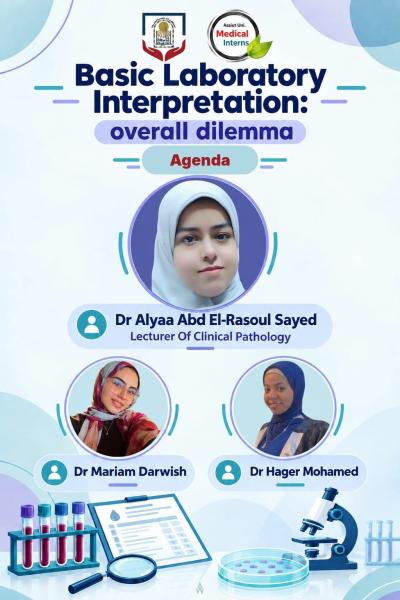
تنظم كلية الطب بجامعة أسيوط يوم الخميس الموافق 1 أكتوبر 2026، يوما علميا بعنوان "Basic Laboratory Interpretation: Overall Dilemma"، حول أساسيات تفسير التحاليل الطبية لأطباء الامتياز دفعة (61)، وذلك تحت رعاية الأستاذ الدكتور علاء عطية، عميد كلية الطب ورئيس مجلس إدارة المستشفيات الجامعية، والأستاذ الدكتور محمد عبد الرحمن، وكيل كلية الطب لشئون التعليم والطلاب، والأستاذة الدكتورة سهير قاسم، مدير البرنامج الإلزامي لأطباء التدريب.

يستهدف اللقاء التعريف بأساسيات قراءة وتفسير نتائج التحاليل والفحوصات المعملية، ومناقشة أبرز التحديات التي قد تواجه أطباء الامتياز والأطباء حديثي التخرج عند التعامل مع النتائج المعملية وربطها بالحالة الإكلينيكية للمريض.

يحاضر في اليوم الدكتورة علياء عبد الرسول، مدرس بقسم الباثولوجيا الإكلينيكية، ويقوم بعرض الحالات كل من، الطبيبة مريم درويش، والطبيبة هاجر محمد، طبيبتان امتياز.

يأتي هذا في إطار حرص كلية الطب على تعزيز التعليم الطبي المستمر وتبادل الخبرات العلمية والعملية، بما يسهم في تنمية مهاراتهم الإكلينيكية ودعم قدراتهم على التعامل بصورة أكثر دقة مع الفحوصات المعملية المختلفة خلال فترة التدريب العملي.

تنطلق فعاليات اليوم في تمام الساعة العاشرة صباحا، بمدرج محاضرات النساء والتوليد.

1 أكتوبر ... كلية الطب تنظم يوم علمي حول أساسيات تفسير التحاليل الطبية  لأطباء الامتياز دفعة (61)


Assiut University Faculty of Medicine organizes a training course for postgraduate students on "Infection Control."

Assiut University Faculty of Medicine organizes a training course for postgraduate students on "Infection Control."

نظمت وحدة ضمان الجودة بكلية الطب جامعة أسيوط، دورة تدريبية لطلاب الدراسات العليا (الماجستير) بعنوان «مكافحة العدوى»، وذلك بوحدة ضمان الجودة.

جاءت الدورة تحت رعاية الأستاذ الدكتور علاء عطية، عميد كلية الطب ورئيس مجلس إدارة المستشفيات الجامعية، والأستاذ الدكتور محمد عبد الباسط خلاف، وكيل الكلية لشئون الدراسات العليا والبحوث، والأستاذة الدكتورة هبة عطية، مدير وحدة ضمان الجودة بكلية الطب.

وتناولت الدورة عددًا من المحاور الأساسية في مجال الوقاية من العدوى ومكافحتها، مع التركيز على مبادئ وإجراءات مكافحة العدوى، وأهمية الالتزام باحتياطات الوقاية القياسية داخل المنشآت الصحية، إلى جانب التعريف بالممارسات الطبية الآمنة التي تسهم في الحد من انتقال العدوى وحماية المرضى ومقدمي الخدمة الصحية.

كما تناولت الدورة أهمية تطبيق معايير مكافحة العدوى في مختلف جوانب الممارسة الطبية، بما يعزز ثقافة السلامة والمسؤولية المهنية لدى طلاب الدراسات العليا، ويدعم جهود الارتقاء بمستوى جودة الخدمات الصحية المقدمة وفقًا لمعايير الجودة والسلامة المعتمدة.

حاضر بالدورة نخبة من الأطباء بوحدة مكافحة العدوى، وهم الدكتورة كريمة محمد، والدكتورة فاطمة النجار، والدكتورة رشا حسني، والدكتورة إيمان عادل، والدكتورة سلمى الداخلي.

Four intrauterine blood transfusion sessions save a fetus from severe anemia at Assiut University’s Women's Health Hospital.

Four intrauterine blood transfusion sessions save a fetus from severe anemia at Assiut University’s Women's Health Hospital.

نجح فريق طبي بوحدة طب الجنين بمستشفى صحة المرأة بجامعة أسيوط في علاج جنين كان يعاني من أنيميا حادة أثناء الحمل، من خلال إجراء (4) جلسات لنقل الدم داخل الرحم (Intrauterine Transfusion)، أسهمت في تحسن حالته وإنقاذه من مضاعفات خطيرة.

جاء ذلك تحت رعاية الأستاذ الدكتور علاء عطية، عميد كلية الطب ورئيس مجلس إدارة المستشفيات الجامعية، وتحت إشراف الأستاذ الدكتور أحمد إبراهيم، مدير مستشفى صحة المرأة، والأستاذ الدكتور محمد فتح، رئيس قسم أمراض النساء والتوليد، والأستاذ الدكتور مصطفى حسين، رئيس وحدة طب الجنين.

وأوضح الفريق الطبي أنه فور تحويل الحالة إلى مستشفى صحة المرأة، تم إجراء فحص بالموجات فوق الصوتية رباعية الأبعاد للجنين، والذي أظهر وجود استسقاء بالبطن، وارتشاحًا تحت الجلد، إلى جانب تأثر واضح في وظائف قلب الجنين.

كما تم إجراء فحص دوبلر لشريان المخ الأوسط للجنين (MCA Doppler)، والذي أظهر مؤشرات قوية على وجود أنيميا شديدة، ليتم على الفور إجراء سحب عينة دم من الحبل السري للجنين (Cordocentesis)، وإجراء تحليل صورة الدم، حيث تبين أن مستوى الهيموجلوبين بلغ 2.7 جم/دل، وهو ما يعكس إصابة الجنين بأنيميا شديدة تهدد حياته.

وعلى الفور، تم تجهيز الأم لإجراء جلسات نقل الدم داخل الرحم، حيث مرت عملية تجهيز الدم بعدة مراحل دقيقة، شملت اختيار الفصيلة المناسبة، وفصل الدم وفلترته وتجهيزه، ثم تعريضه للإشعاع وفق الإجراءات الطبية المتبعة، قبل نقله إلى الجنين.

وتمكن الفريق الطبي من إجراء (4) جلسات لنقل الدم داخل الرحم على مدار (3) أسابيع، بواقع جلسة كل (5) أيام، مع متابعة دقيقة لحالة الجنين قبل وبعد كل جلسة.

وأظهرت نتائج الفحوصات بعد الجلسة الرابعة ارتفاع مستوى الهيموجلوبين لدى الجنين من 2.7 إلى 9.7 جم/دل، إلى جانب اختفاء الارتشاح تحت الجلد وتحسن ملحوظ في وظائف القلب، بما عكس استجابة إيجابية للعلاج.

كما خضعت الأم لمتابعة طبية دقيقة طوال فترة الحمل، مع إعطائها الأدوية اللازمة للمساعدة على اكتمال نمو رئتي ومخ الجنين (Steroids & Magnesium Sulphate)، إلى أن تمت الولادة داخل المستشفى، حيث أظهرت صورة الدم عقب الولادة وصول مستوى الهيموجلوبين لدى الطفل إلى 9.5 جم/دل، وتم وضعه تحت الملاحظة والمتابعة الطبية المستمرة.

أُجريت جلسات نقل الدم داخل الرحم بواسطة الدكتور محمد جمال فكري، مدرس أمراض النساء والتوليد واستشاري وحدة طب الجنين، يعاونه كل من الطبيب محمد أيمن، والطبيب محمد حسني، والطبيب مصطفى عسقلاني، نواب القسم، ومن هيئة التمريض، الأستاذة منى حسين، والأستاذة شيماء حسين، والأستاذة سمر محمد، وتحت إشراف الأستاذة سعدية جرس، مشرفة التمريض بالقسم.

كما تم تجهيز الدم المستخدم في عمليات النقل من خلال فريق أطباء بنك الدم بالمستشفى، تحت إشراف الأستاذة الدكتورة إيمان نصر الدين، أستاذ الباثولوجيا الإكلينيكية، ومدير بنك الدم.

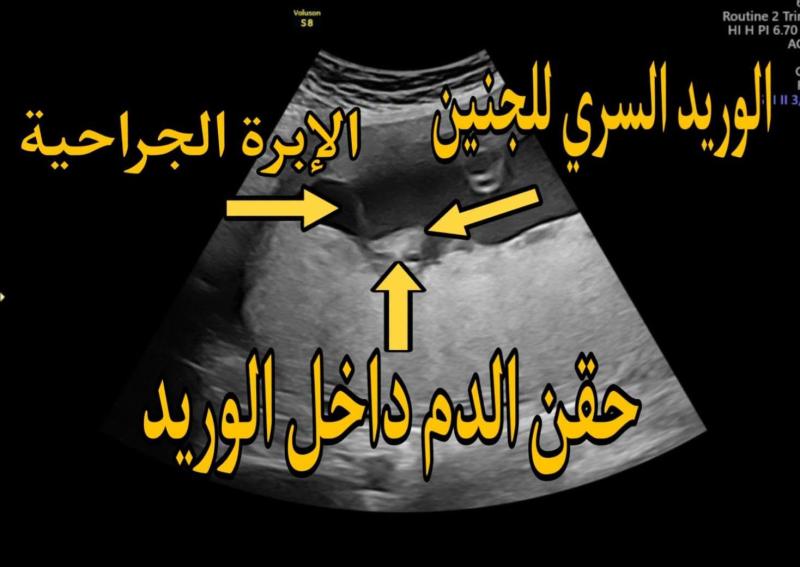
ويُعد نقل الدم داخل الرحم من أدق وأصعب الإجراءات العلاجية في مجال طب الجنين، حيث يتم إدخال إبرة دقيقة عبر جدار بطن الأم، وتوجيهها باستخدام الموجات فوق الصوتية حتى تصل إلى الوريد بالحبل السري للجنين، ثم يتم نقل الدم المجهز إليه بمعدلات محسوبة بدقة تتناسب مع حالته ووظائف القلب.

ويتطلب هذا النوع من التدخلات مستوى عاليا من المهارة والخبرة في استخدام الموجات فوق الصوتية، إلى جانب الدقة الشديدة في توجيه الإبرة إلى المكان المحدد داخل الحبل السري، بما يضمن تحقيق أكبر استفادة علاجية مع تقليل المخاطر المحتملة.

وتأتي هذه الحالة في إطار ما تقدمه وحدة طب الجنين بمستشفى صحة المرأة الجامعي من خدمات متخصصة في مجال تشخيص وعلاج الحالات الحرجة للأجنة، حيث تُعد الوحدة من أوائل الوحدات المتخصصة في صعيد مصر التي تجري هذا النوع من التدخلات، وتواصل تقديم عمليات نقل الدم داخل الرحم على مدار العامين الماضيين، بما يعكس تطور مستوى الخدمات الطبية المتخصصة المقدمة بالمستشفى، وحرصها على مواكبة أحدث التقنيات العالمية في مجال طب الجنين، وتوفير رعاية طبية متقدمة للأمهات والأجنة.

4 جلسات لنقل الدم داخل الرحم تنقذ جنينا من أنيميا حادة بمستشفى صحة المرأة بجامعة أسيوط


Subscribe to