Effect of Educational Program on Knowledge and Preventive Practices Regarding Cervical Cancer Screening and Human Papillomavirus Vaccine among Childbearing Women

Research Abstract
Background
Cervical cancer knowledge level and human papillomavirus vaccine wasinsufficient among women aged 20–45 years old, especially those of lower socioeconomiccondition.
Aim
assess the effect of the educational program on knowledge andpreventive practices regarding cervical cancer screening and human papillomavirusvaccine among childbearing women.
Methods
a quasi-experimental pre and post-testdesign was used.
Sample
a purposive sample of 135 women aged 18-44 years. Two toolswere used to conduct this study. Tool (1): An interview questionnaire consisted of twoparts: the first part involved personal, obstetrical, and family planning data, history ofcervical cancer, pap smear testing, and HPV vaccine. The second part was the knowledgeof cervical cancer, screening, and HPV vaccine. Tool (2) was the women's preventivepractices regarding cervical cancer screening and the HPV vaccine.
Results
The findingsof this study illustrated that before intervention 8.1%, 12.6% & 23.7% of the participantshad good knowledge, satisfactory practice & performed CC screening respectively. Afterintervention 73.3% of participants had good knowledge, 82.2% and 98.5% of them hadsatisfactory practice and performed CC screening respectively (p-value <0.01).
Conclusion
a structured educational intervention substantially improved knowledge andinfluenced practice changing of participants regarding cervical cancer screening and HPVvaccination.
Recommendations
the establishment of nationwide education programs, aswell as screening programs, and raising awareness campaigns to improve access tocervical cancer
Research Authors
Aya M Abdelhafez, AF Kawi, Safaa H Mohamed, Alaa El-Din Mahmoud Ismail, Walaa H Ibrahim
Research Date
Research Journal
Tanta Scientific Nursing Journal
Research Year
2024

Metacognition and Nursing Students’ Academic Achievement: An Experimental Study

Research Abstract

Abstract

Nursing students can improve their ability to think critically and reflect on their own learning processes by developing metacognitive abilities. Aim: The purpose of this study is to evaluate how nursing students’ academic performance is impacted by metacognitive programs. Methodology: The current study was carried out at North Private College of Nursing using an experimental design. Seventy fourth-year nursing students were included in the sample, split into two equal groups: the experimental group and the control group. Data was gathered using two instruments: (1) Metacognitive Awareness Inventory (2) Students’ transcripts. Results: The experimental group showed notably higher levels of metacognition than the control group (80% against 11.42%, respectively). Before the program started, most of the nursing students in the experimental and control groups, 91.7% and 90.4% respectively, had poor critical thinking ability. Relative to the control group, the nursing students in the experimental group who received metacognitive training showed a considerably higher degree of academic success. Conclusion: The experimental group exhibited a notable improvement in nursing students’ metacognition and academic performance relative to the control group following the program’s introduction. Recommendations: Offering training programs for faculty on cultivating students’ metacognitive abilities and serving as models and coaches for these talents. Implementing active learning strategies (reflections, case studies, group projects, simulations, and problem-solving exercises) that need the use of metacognitive skills by students.

Research Authors
Ebtisam Abd Elazeem Saber Seleem, Ashraf Amin Eltahan, Amr M. Mohamed & Manal Mohammed Ahmed Abdelaziz
Research Date
Research Journal
AI-Driven Healthcare: Automation and Robotics (book) Part of the book series: Studies in Systems, Decision and Control
Research Pages
373-385
Research Publisher
Springer Cham
Research Website
https://link.springer.com/chapter/10.1007/978-3-032-15739-3_27
Research Year
2026

Relationship Between Staffing and Organization Performance: Systematic Review

Research Abstract

Abstract

Background: The performance of nursing staff is a critical factor in quality healthcare services delivery, and a number of variables such as leadership styles, work stress, staffing levels, and empowerment have been considered to contribute to it. Objective: to critically apprise the influence of nurse leadership behaviors, work stress, staffing levels, and empowerment on nursing staff performance. Method: A systematic literature review was performed of studies published from 2021 to 2023. A total of ten articles were reviewed from different healthcare settings, surveys, questionnaires and observational data were used in the studies. Results: The results indicate that nursing staff performance is enhanced by transformational leadership through job satisfaction, trust and organizational commitment. On the other hand, toxic leadership results in employees who disengage and become silent and under-perform. A sufficient nurse staffing and empowerment are essential for enhancing both satisfaction and nurse commitment. There is a negative relationship between work stress, compassion fatigue, burnout and the performance, while person–job fit could be a potential moderator. Conclusion Efficient leadership, sufficient staffing and a supportive working environment are needed to improve the performance of nurses.

Research Authors
Islam Oweidat, Ebtisam Seleem, Anas Khalifeh & Ghada Abu Shosha
Research Date
Research Journal
AI-Driven Healthcare: Automation and Robotics (book) Part of the book series: Studies in Systems, Decision and Control
Research Pages
153-166
Research Publisher
Springer Cham
Research Website
https://link.springer.com/chapter/10.1007/978-3-032-15739-3_11
Research Year
2026

Wake Up Call: A Qualitative Study of Nursing and Medical Managers' Perceptions and Support for Nurses' Night Shift Napping in Intensive Care Units

Research Abstract

Background

Night shift work in healthcare settings is associated with increased fatigue, decreased alertness and potential risks to patient safety. While nurses napping during night shifts has been proposed as a strategy to mitigate these effects, its implementation remains controversial and understudied from a managerial perspective.

Aim

This study aimed to explore nursing and medical managers' perceptions of, and support for nurses' night shift napping policies in intensive care units.

Study Design

A qualitative descriptive approach was employed from the beginning of March 2024 to the end of October 2024, utilising semi-structured interviews with 40 nursing and medical managers from various intensive care units. Participants were purposively sampled to ensure diversity in experience and department. Interviews were audio-recorded, transcribed verbatim and analysed using thematic analysis.

Results

Five main themes emerged: (1) Understanding perceptions of night shift napping, (2) perceptions of the benefits of night shift napping, (3) assessing support for night shift napping, (4) barriers and challenges of applying napping strategies and (5) developing effective implementation strategies to facilitate the successful adoption of napping policies. While most managers acknowledged the potential benefits of night shift napping, they expressed apprehension about its practical implementation, staff coverage concerns and the potential for policy abuse. Supportive managers emphasised the importance of education, structured guidelines and gradual cultural change to successfully integrate napping practices.

Conclusion

The findings suggest that while there is growing recognition of the potential benefits of night shift napping, significant barriers to implementation persist. The results can inform the development of evidence-based napping policies and guide strategies to address managerial concerns, ultimately improving night shift working conditions and patient care quality.

Relevance to Clinical Practice

Researching the perceptions and support of nursing and medical managers for night shift napping in ICUs is relevant to clinical practice, as it can provide insights into the potential benefits, challenges and strategies for implementing such policies. These findings may ultimately improve patient safety, staff well-being and quality of care.


Research Authors
Ghada Shalaby Khalaf Mahran, Emran A. Abu Aqoulah, Ebtisam Abd Elazeem Saber Seleem, Mervat Abd Elhamed Hawash, Ragaa D. M. Ahmed
Research Date
Research Journal
Nursing in Critical Care
Research Publisher
Wiley
Research Vol
30
Research Website
https://onlinelibrary.wiley.com/doi/epdf/10.1111/nicc.70056
Research Year
2025

Psychological drivers of innovative work behavior in nursing: the roles of creative self-efficacy, trust in supervisors, uncertainty avoidance, and psychological capital

Research Abstract

Abstract Background Innovation enables nurses to improve care delivery, yet their role is rarely recognized. The work activities in innovative work behavior (IWB) are characterized by their dynamic nature, involving complex tasks that are not standardized or routine in nature. This study examined the relationships between creative self-efficacy (CSE), trust in supervisors, uncertainty avoidance, psychological capital, and innovative work behavior among Egyptian nurses. Methods A cross-sectional correlational design was employed. A convenience sample of 310 nurses (mean age=31.52±8.21 years), of both genders and aged above 18 years, was recruited at Assiut University Hospital. Data were collected using a structured questionnaire including demographic and work-related data, the Creative Self-Efficacy Scale, Trust in Supervisor Scale, Uncertainty Avoidance Scale, Psychological Capital Questionnaire, and Innovative Work Behavior Scale. Data were analyzed using descriptive statistics, Pearson correlation coefficients, and multiple linear regression analysis. Results Using convenience sampling, participants were categorized into low, moderate, and high IWB groups. The findings demonstrated that higher levels of innovative work behavior were associated with higher levels of creative self-efficacy, uncertainty avoidance, and psychological capital. Significant positive correlations were observed between IWB and all studied psychological variables. Multiple regression analysis revealed that creative self-efficacy, uncertainty avoidance, and psychological capital were significant predictors of innovative work behavior, whereas trust in supervisors did not retain statistical significance. Conclusions The results highlight the multifaceted psychological determinants of innovative work behavior in nursing practice the findings suggest that strengthening nurses’ creative self-efficacy, psychological capital, and adaptive responses to uncertainty may enhance innovative work behavior.

Research Authors
Ebtisam Abd Elazeem Saber Seleem1,2, Gellan K. Ahmed3*, Nadia Abd El-ghany Abd El-hameed4 and Saleh Omar Abdullah5
Research Date
Research File
Research Journal
The Egyptian Journal of Neurology, Psychiatry and Neurosurgery
Research Pages
1-8
Research Publisher
Springer Nature
Research Vol
62
Research Website
https://link.springer.com/article/10.1186/s41983-026-01107-2
Research Year
2026

Congratulations on the academic promotion. Prof. Fatima Rushdi Muhammad, Dean of the Faculty of Nursing – Assiut University, the Vice Deans of the Faculty,

the heads of the academic departments, and all members of the administrative staff extend their warmest heartfelt congratulations and best wishes

On the occasion of the promotion of Dr. Saeeda Abdel Hamid Abdel Aziz to the rank of Professor of Elderly Nursing, Faculty of Nursing, Assiut University.

With sincere calls for continued success and guidance, and more success and scientific and professional advancement in serving the Faculty and advancing the educational and research process


The Dean of the Faculty approves the results of the first level – the second semester 2025/2026 AD. Prof. Fatima Rushdi Muhammad, Dean of the Faculty of Nursing, approved the results of the first level for the second semester of the academic year


2025/2026 AD. Prof. Marzouqa Abdel Aziz explained that the number of male and female students who took the exams reached 985 male and female students, and the success rate reached 95.27%, which reflects the effort made by our students, faculty members, and support staff.

Sincere congratulations to our successful students, with best wishes for continued success, excellence and distinction in their academic career.

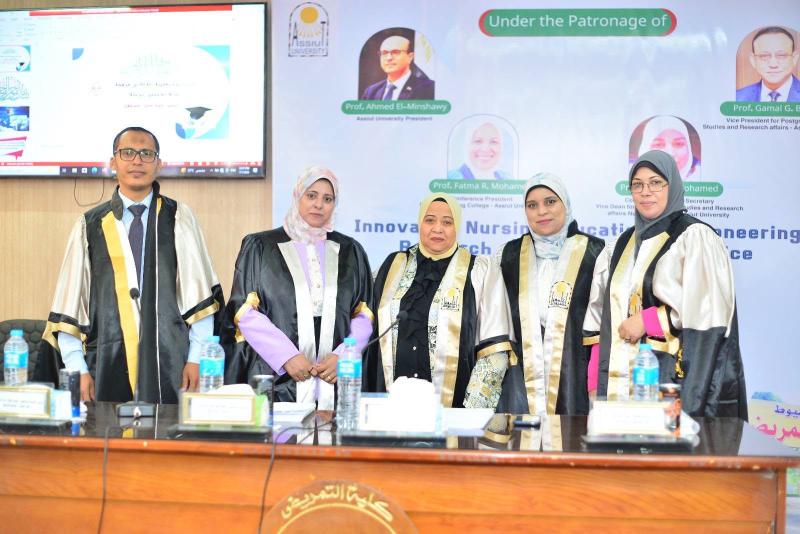
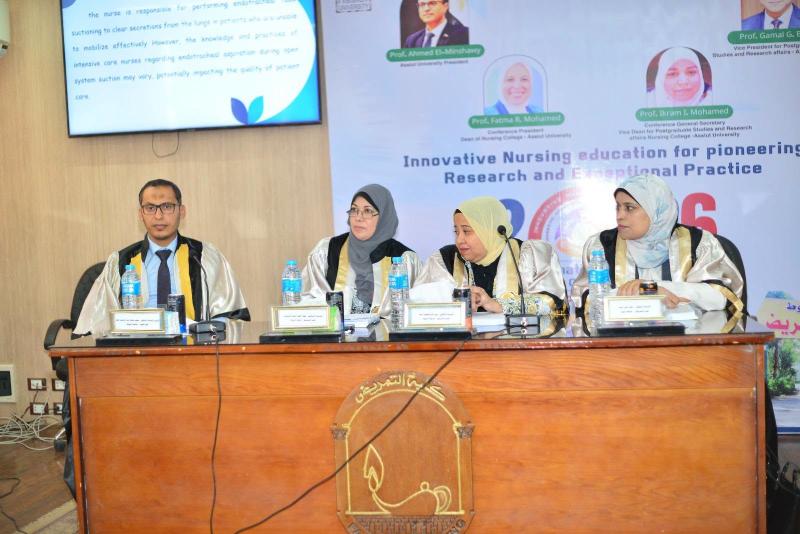
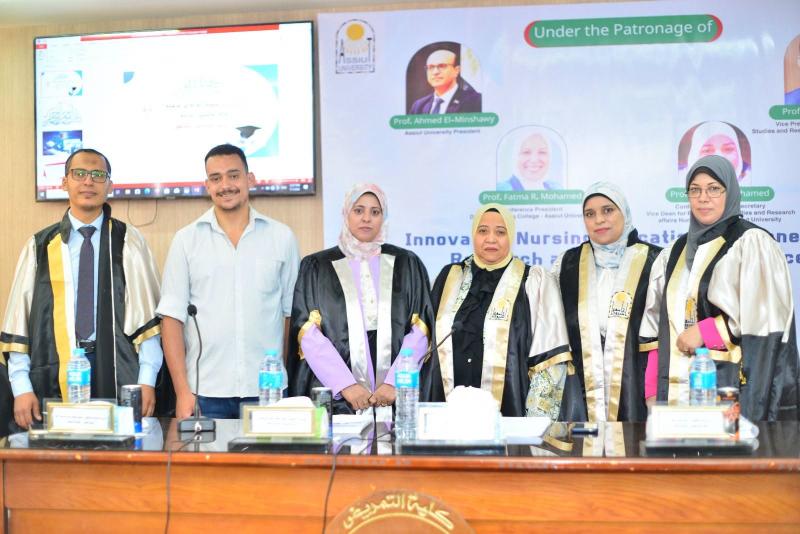
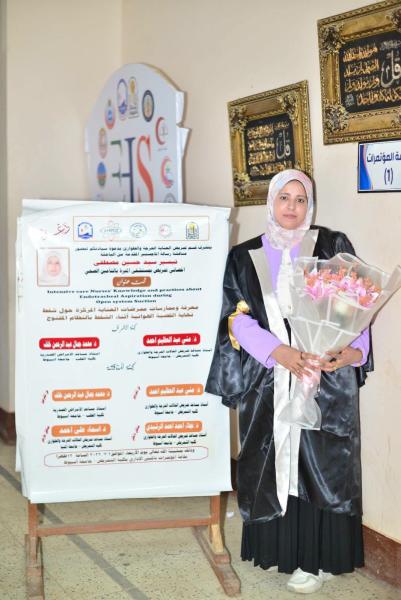
Congratulations on accepting the master's thesis The Faculty of Nursing – Assiut University extends its sincere congratulations to the researcher/ Tayseer Sayed Hussein Mustafa, a nursing specialist at Al-Mabarrah Hospital with health insurance,

, on the occasion of accepting the master's thesis


Under the title

Intensive care Nurses' Knowledge and practices about Endotracheal Aspiration during Open system Suction

Supervision and Discussion Committee:

Dr. Mona Abdel Azim Ahmed, Assistant Professor of Critical Care and Emergency Nursing, Faculty of Nursing - Assiut University, on behalf of supervisors.

Dr. Mohamed Gamal Abdel Rahman Khalaf, Assistant Professor of Chest Diseases, Faculty of Medicine, Assiut University, on behalf of the supervisors.

Dr. Engy Ahmed Ahmed Al-Rashidi, Assistant Professor of Critical Care and Emergency Nursing, Faculty of Nursing - Assiut University, Internal Discussant.

Dr. Asmaa Ali Ahmed, Assistant Professor of Critical Care and Emergency Nursing, Faculty of Nursing - Minya University, External Discussant.

With sincere wishes for continued success and guidance in his scientific and research career.

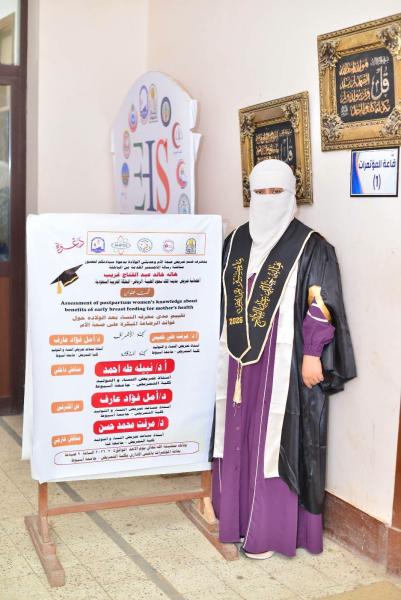
Congratulations on accepting the master's thesis The Faculty of Nursing – Assiut University extends its sincere congratulations to researcher Hala Khaled Abdel Fattah Gharib, nursing specialist at King Saud Medical City – Riyadh – Kingdom of Saudi Arabia,

on the occasion of accepting the master's thesis

Under the title of the message:

Assessment of postpartum women's knowledge about benefits of early breast feeding for mother's health

Supervision and Discussion Committee:

Prof. Mervat Ali Khamis, Professor of Obstetrics and Gynecology Nursing, Faculty of Nursing - Assiut University. About supervisors

Prof. Nabila Taha Ahmed, Professor of Obstetrics and Gynecology Nursing – Faculty of Nursing – Assiut University. Internal discussant

Dr. Amal Fouad Arif, Assistant Professor of Obstetrics and Gynecology Nursing – Faculty of Nursing – Assiut University. About supervisors

Dr. Mervat Mohamed Hassan, Assistant Professor of Obstetrics and Gynecology Nursing – Faculty of Nursing – Qena University. External discussant

With sincere wishes for continued success and guidance in his scientific and research career

Subscribe to