Schedule of Second Term for Fourth Year Students 2023-2024
The schedule of the second term of fourth-year students 2023-2024.

The schedule of the second term of fourth-year students 2023-2024.

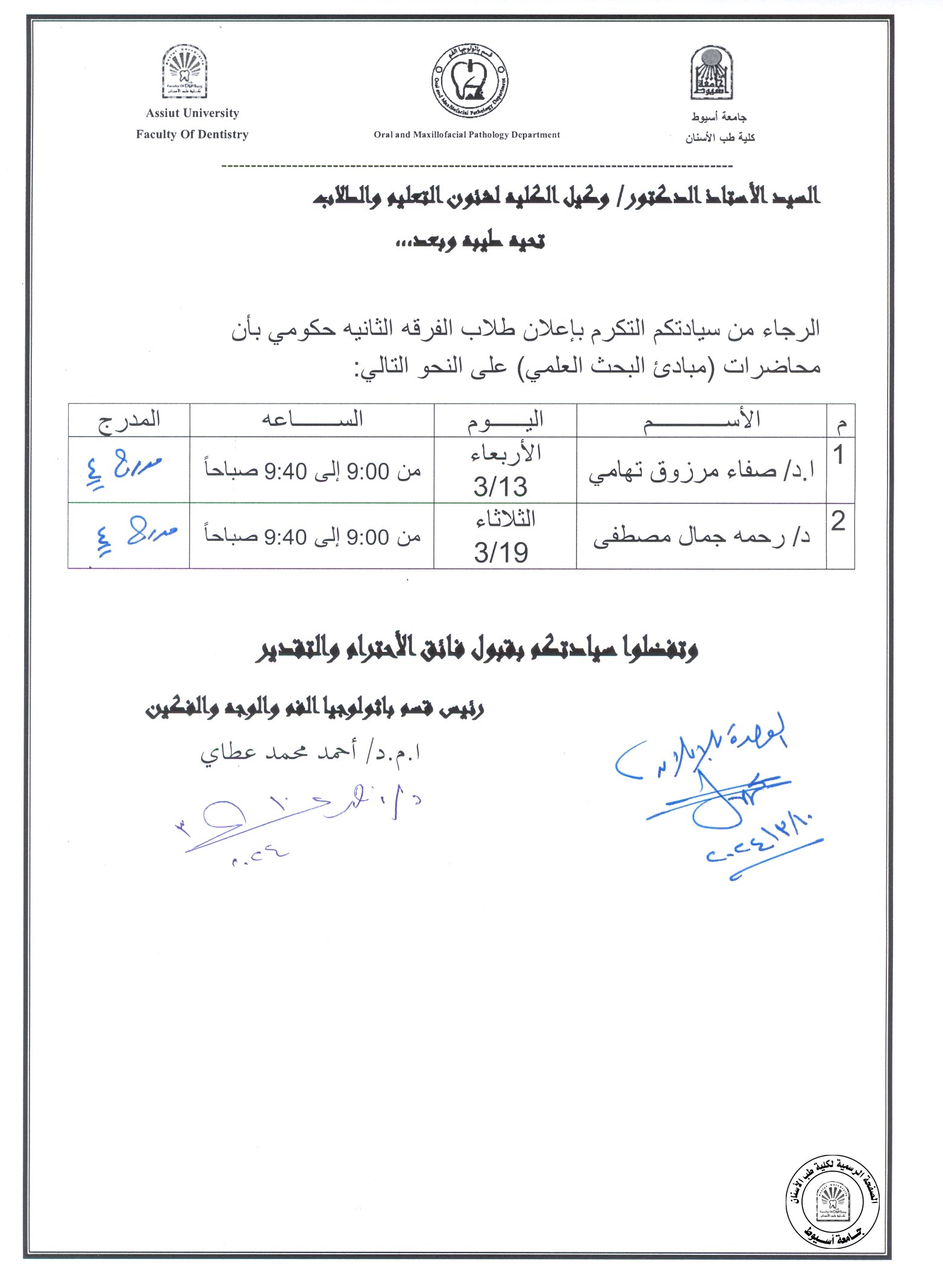
The schedule of the second term of second-year students 2023-2024.

The Central Youth Welfare Administration announces, "Our Health on Our Planet," a video competition in collaboration with the Ministry of Environment and Sano Co. by making a captivating 5-minute video exploring one or more of these crucial topics:
- Sustainable Development and Green Jobs
- Climate Change and Climate Technology, and Carbon Footprint
- Nature Reserves and Investing in Nature
Deadline: February 15, 2024
Registration: Contact the Youth Welfare Administration's activity coordinator for details.

The schedule of the second term of fifth-year students 2023-2024.

The Central Youth Welfare Administration is forming a theater team of first- and second-year students for the fifth season of the Arts Centers 2024. To register, please visit the theater department at the faculty.

The schedule of the second term of third year students 2023-2024.

The Youth Welfare Administration in the Faculty of Physical Education will organize an activities festival for Assiut University students from 20 to 22 January 2024, The festival will feature a variety of activities and events for students of all interests, including sports, culture, camping, science, art, and social activities. To register, please visit the Youth Welfare Administration in the faculty.

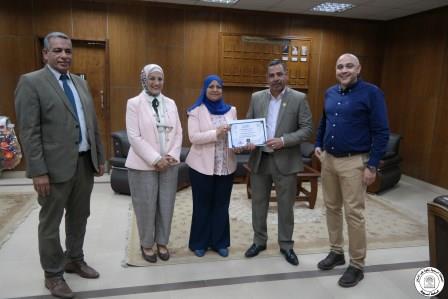
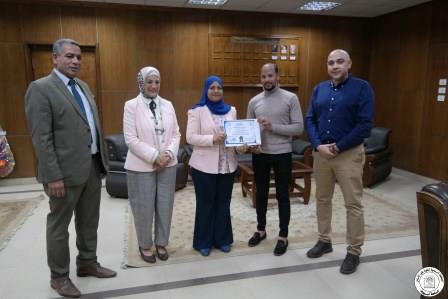
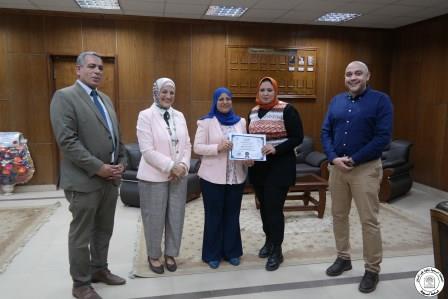
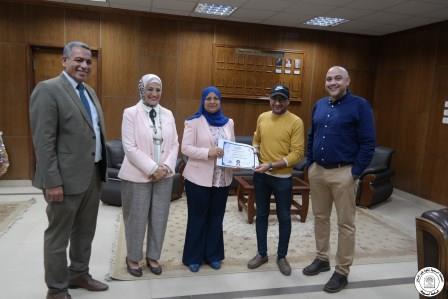
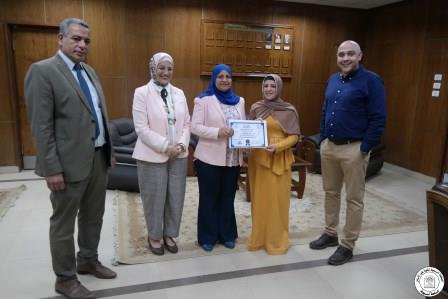
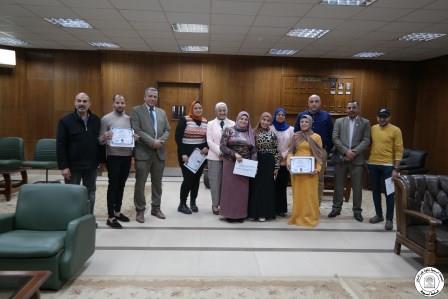
On behalf of the Faculty of Dentistry community, we extend our heartfelt congratulations to Dr. Mayada Ghalab AlSady on her master’s degree in Oral Radiology.

objective: In Class I, Class II, and Class III cases, disc and condylar locations, as well as joint spaces were evaluated and compared. The goal of this study was to see how likely the three groups were to develop temporomandibular disorders (TMDs). Materials and Methods: Certain inclusion and exclusion criteria were used to select a sample of 90 cases, with 30 cases in each of the three classes (Class I, Class II, and Class III). In the sagittal plane, magnetic resonance imaging (MRI) was used to study the location of the articular disc, condyle, and joint spaces using a closed mouth approach. Results: The morphology of the temporomandibular joint (TMJ) was altered in both Class II and Class III patients, with the greatest disparity in Class II patients. In Class II patients, MRI revealed a tendency for anterior disc displacement with condyles positioned more anteriorly. In the Class III patients, the disparity was smaller. Conclusions: Class II patients are more likely to develop TMDs and it is advised to evaluate the TMJ before beginning orthodontic treatment to identify and stop an asymptomatic TMD from progressing to a more severe form.
ABSTRACT
Aim: The aim of this study was to assess clinically and radiographically the efficacy of the socket shield technique in maintaining facial contours and crestal bone after immediate implant placement, combined with PRF application.
Subject and Methods: Sixteens patients with 16 implants were divided into two groups, Group “1”: 8 Patients were subjected to socket shield procedure combined with immediate implant placement alone. Group “2”: 8 Patients were subject to socket Shield technique and immediate implant placement combined with PRF application. Clinical parameters were gathered at baseline, 6-, and 12-months post-operative.
Results: There was a statistically significant difference between (Group 1) and (Group 2) in (mSGI), There was a statistically significant difference between (Group 1) and (Group 2) at 6 months in implant stability, and there was a statistically significant difference between both groups at 6 months in peri-implant pocket depth, there was no statistically significant difference between (Group 1) and (Group 2) in modified plaque index. Also, there was no statistically significant difference between (Group 1) and (Group 2) at different periods in bone density, In addition, There was a statistically significant difference between (Group 1) and (Group 2) groups at 12 months in (MBL). While there was no statistically significant difference between (Baseline), (6m), and (12m) between the two groups in labial bone thickness.
Conclusion: The socket shield technique with or without PRF application was shown to be effective to achieve osseointegration without any inflammatory response. Using PRF with socket shield and immediate dental implants exhibited to be superior to immediate dental implants with socket shield alone in improving peri-implant conditions and dental implants.