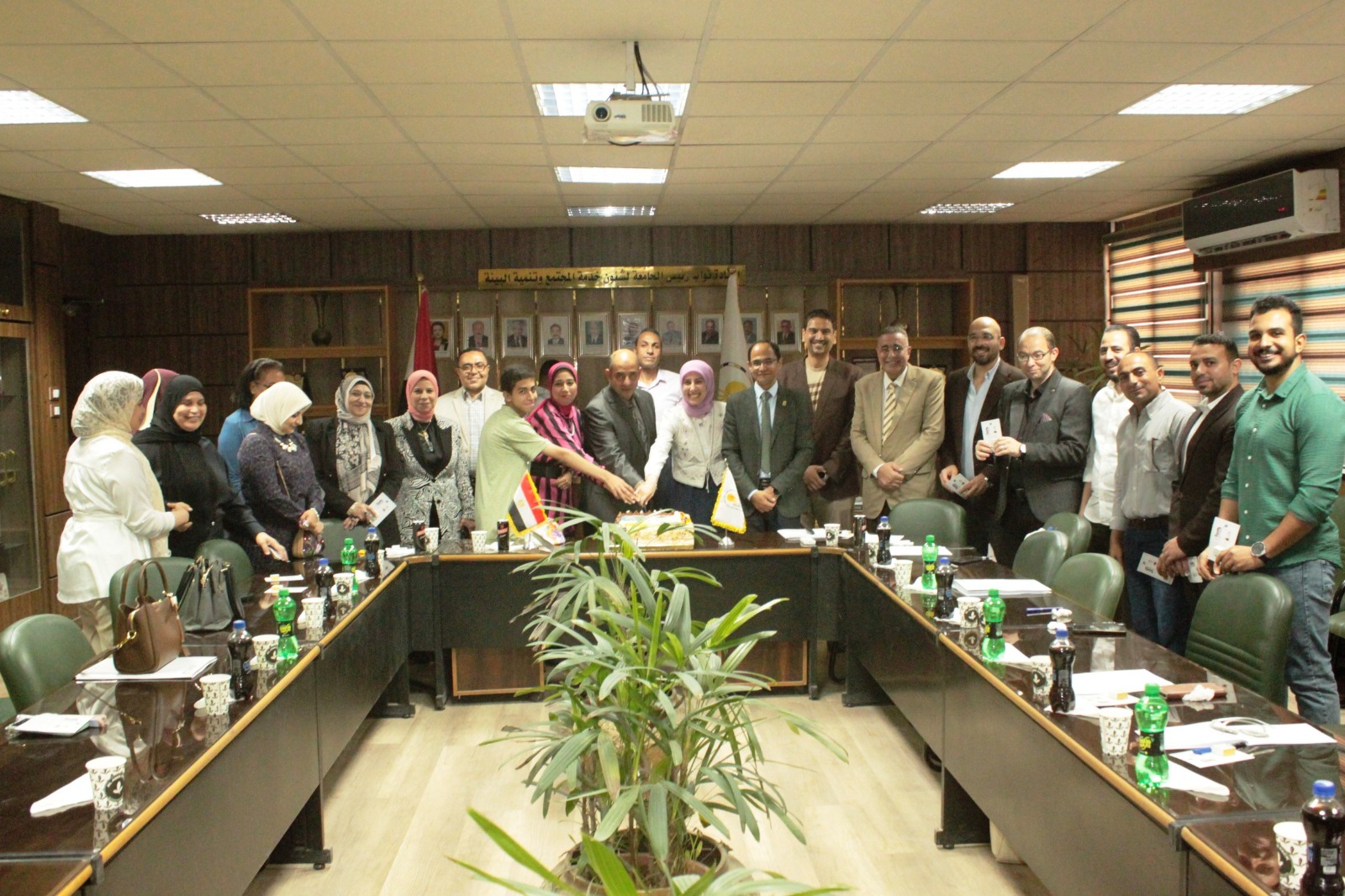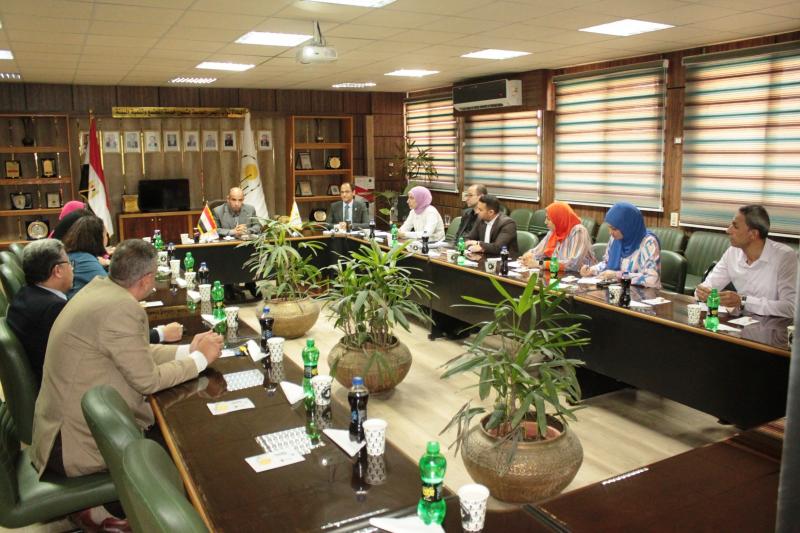
Under the auspices of Professor El-Menshawy, President of Assiut University, the Community Service and Environmental Development Sector organized a workshop entitled "Procedures of the Environmental Practices and Sustainability Follow-up Committee for the University Faculties and the Techniques of Completing Their Reports", for the members of the Environmental Practices and Sustainability Follow-up Committee at the Faculties of Assiut University (the Committee for the Best Eco-Friendly College), headed by Dr. Mohamed Adawi, Vice President for Community Service and Environmental Development Affairs, and under the supervision of Dr. Mohamed Mostafa Hamad, Professor at the Faculty of Education and General Coordinator of the Committee, and Dr. Rehab Al-Dakhli, Media Coordinator of the Committee. This is part of the university's efforts to consolidate the culture of environmental sustainability and promote environmentally friendly practices within its various colleges.
The workshop was attended by members of the Environmental Practices and Sustainability Follow-up Committee, which includes a group of faculty members from various faculties of the university, with the aim of unifying work mechanisms and raising the efficiency of preparing field follow-up reports in accordance with the approved standards.
Professor El-Menshawy stressed that the university continues to implement its vision towards consolidating the principles of environmental sustainability, by supporting environmentally friendly practices, and creating a sustainable university environment that is in line with the goals of the state and Egypt's vision for sustainable development, pointing out that the university is keen to spread environmental awareness among all its affiliates, and to support colleges in developing their educational environment, in a way that contributes to protecting resources and rationalizing their consumption.
Dr. Mohamed Adawi explained that the Committee for the Follow-up of Environmental Practices and Sustainability is working according to a clear plan to monitor and evaluate the environmental performance in the university's colleges, by following up on a number of axes, including infrastructure, green spaces, transportation, waste management, and other sustainability indicators, in a way that enhances positive competition among colleges and supports continuous improvement efforts. He added that the field visits of the committee will start from Sunday, July 12, 2026, through five consecutive rounds, to follow up on the level of compliance with environmental standards, and monitor what has been achieved developed within the colleges, in order to support the achievement of institutional sustainability.
During the workshop, Dr. Mohamed Mustafa Hamad reviewed the procedures of field visits and the mechanisms for their implementation, stressing the importance of following up on the corrective measures implemented according to the reports of previous visits, in addition to clarifying the technical and linguistic foundations for preparing follow-up reports, and how to highlight the aspects of excellence and opportunities for improvement within each college.
He also addressed the documentation mechanisms as one of the most important evidence and evidence supporting evaluation reports, while clarifying the best practices in integrating them into the final reports, and concluded the workshop by presenting the approved forms of reports, which include the evaluation indicators of classrooms, administrative offices, cafeterias, toilets, warehouses, skylights, green spaces, and the transportation system, in order to ensure the
unification of evaluation standards and the achievement of the highest levels of quality in the committee's work.
Dr. Rehab Al-Dakhli, Media Coordinator of the Committee, stressed that media documentation of field visits is an important tool to highlight successes and distinguished environmental practices within the university's colleges, and to disseminate positive models that contribute to stimulating the spirit of constructive competition between colleges. She added that media documentation is also keen to monitor aspects that need to be developed, in support of continuous improvement efforts and achieving environmental sustainability goals.
At the end of the event, the two members of the committee, Prof. Dr. Randa Mohamed Youssef, Professor at the College of Agriculture, and Prof. Dr. Samar Al-Sheshtawi, Assistant Professor at the College of Agriculture, were honored in appreciation of their efforts in the work of the Committee, and congratulated them on the occasion of their scientific promotion.